
Casement Impact Windows South Florida | Hurricane-Rated Installation

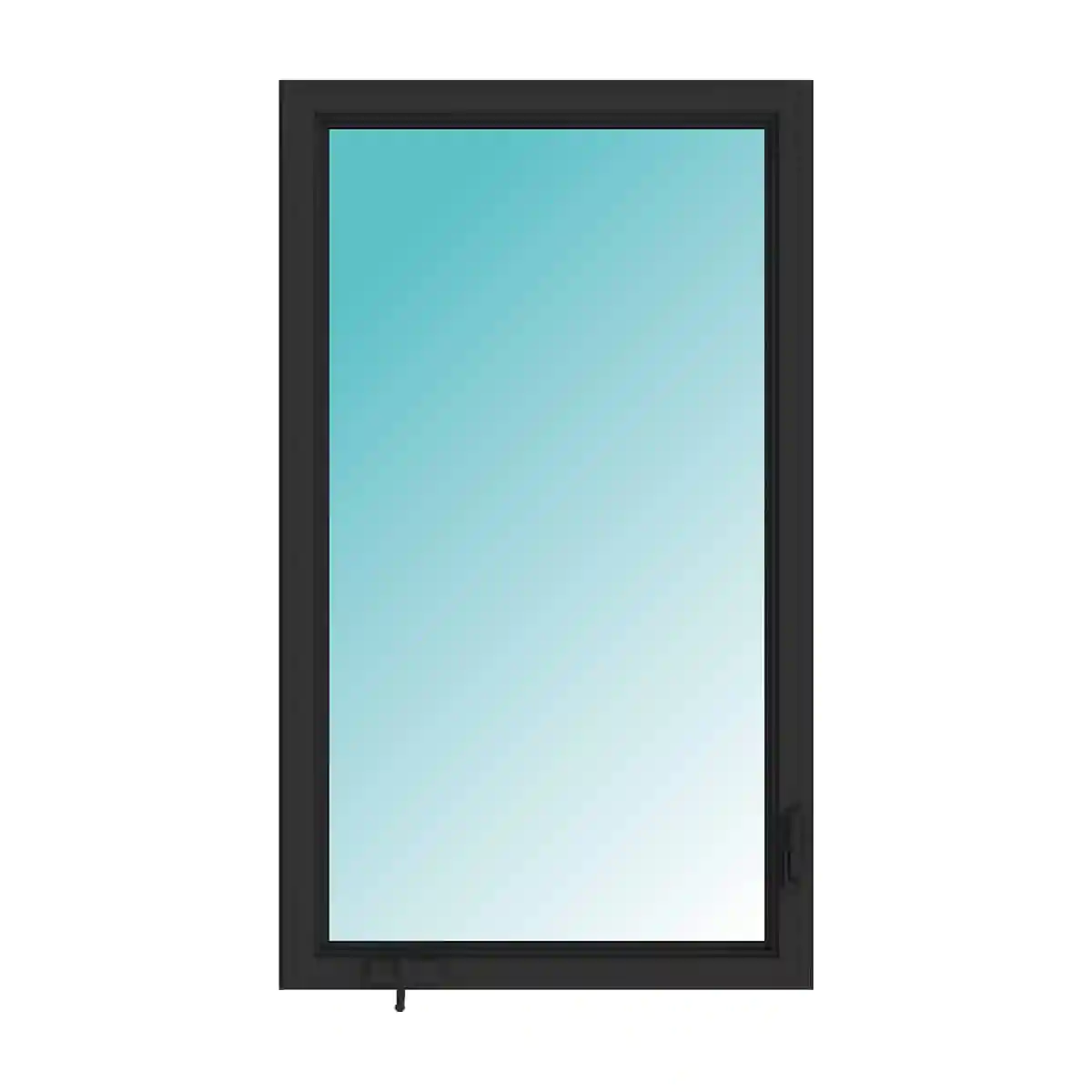
Casement impact windows are side-hinged, outward-opening impact-rated window units operated by a geared crank, which swings the entire sash clear of the frame and delivers close to 100% of the rough opening as usable ventilation — roughly double a single hung or horizontal roller. In Miami-Dade and Broward counties’ High-Velocity Hurricane Zone, a casement must carry a Miami-Dade Notice of Acceptance covering the sash, frame, glazing, hinge and operator hardware, multi-point lock, and anchor pattern as a single tested assembly, passing TAS 201 large missile impact, TAS 202 static pressure, and TAS 203 cyclic wind pressure. Casement units are most often specified in kitchens above sinks and counters, in bedrooms that must satisfy emergency egress requirements, and on view-facing walls where narrow sightlines and unobstructed glass are priorities.


Impact Windows Cost in South Florida 2026
best impact windows cost in South Florida
affordable impact windows cost in South Florida
single hung impact windows cost in South Florida
Casement Impact Windows

What Are Casement Impact Windows?

Casement impact windows are single-sash units hinged on the left or right jamb and opened outward by a geared crank operator, secured by multi-point locking hardware that engages the frame at several points along the sash. This distinguishes them from awning windows, which hinge at the top and swing outward from the bottom, and from single hung and horizontal roller units, where one sash slides past another and only half the opening is ever clear.


The side-hinge geometry produces the two characteristics that define casement performance. First, the sash swings entirely clear of the frame, so the full rough opening becomes usable ventilation area. Second, wind pressure on a closed casement pushes the sash into its frame rather than across a sliding track, compressing a continuous perimeter gasket. That compression seal is the tightest closure available in a residential operable window, which is why casement units consistently test to lower air infiltration rates than sliding types.


Every exterior window installed in South Florida must meet the wind-load and impact provisions of the Florida Building Code for its county wind zone. In Miami-Dade and Broward Florida's High-Velocity Hurricane Zone a casement assembly requires a Miami-Dade Notice of Acceptance covering the sash, frame, glazing, hinge and operator hardware, multi-point lock, and anchor pattern as a single tested unit. Component substitution voids the approval. Republic specifies NOA-approved casement systems and installs them in the exact configuration the approval documents.

Why Casement Costs More Than a Single Hung

Casement is typically the most expensive operable impact window type per opening in South Florida. Four things drive that, and none of them are markup.


Hardware content

A casement carries a geared operator, hinge arms rated for the sash weight, and a multi-point lock engaging at several points around the perimeter. A single hung carries a balance system and a cam lock. Every one of those casement components is part of the tested NOA assembly and has to be rated, not just fitted.


Design pressure on the hinge line

A closed casement transfers positive and negative wind load through its hinge arms and lock points rather than distributing it across a track. Meeting HVHZ design pressures through that load path requires heavier hardware and often heavier frame extrusions than an equivalent sliding unit.


A narrower approval pool

Fewer casement configurations carry HVHZ approval than single hung, which is the volume product in this market. Thinner supply means less competitive pricing and longer lead times on non-standard sizes. It is also the reason casement is comparatively uncommon in South Florida despite performing better on ventilation and air sealing.


Size limits drive unit count

Because the sash cantilevers off its hinges, maximum approved casement dimensions are tighter than for fixed or single hung units. A wide opening that a single hung would fill in one unit may require a casement pair or a casement-plus-fixed combination — more units, more hardware, more labor.

For current per-opening figures by window type, home size, and county permit fees, see our impact window cost guide.

best impact door installation South Florida
fixed-impact-windows-south-florida

Casement Windows and Emergency Egress in Florida

Florida Building Code requires every sleeping room to have at least one operable emergency escape and rescue opening.


Net clear opening is measured through the open sash, not across the rough opening. That distinction decides which window types can satisfy egress in a given wall.


A single hung only ever opens half its height, so the unit must be roughly twice the required clear height before it qualifies. A horizontal roller has the same problem across its width. An awning window rarely qualifies at all, because the open sash projects back into the opening it is meant to clear. A casement swings fully out of the way, so its net clear opening approaches the full sash dimension.


In practice, a casement can meet egress in a rough opening where no other operable impact type can. That matters in three situations common across South Florida:

  • Bedroom window replacement in older block construction, where enlarging the opening means structural work, engineering, and a larger permit scope.
  • Secondary and guest bedrooms with modest original openings.
  • Additions and conversions where a room is being reclassified as a bedroom and must now satisfy egress for the first time.

Republic verifies net clear opening against the code requirement during the estimate, before any unit is ordered, and egress compliance is confirmed at municipal final inspection.

Where Casement Makes Sense in a South Florida Home

Kitchens above sinks and counters

Crank operation reaches across a counter or sink where a sash you have to push, lift, or slide is awkward or out of reach. This is the most common residential casement application in the region.


Bedrooms that must meet egress

Covered above — frequently the only impact-rated operable type that qualifies without enlarging the opening.


View-facing walls

Casement frames run narrower than single hung, which carries a meeting rail straight across the middle of the glass. On an intracoastal, ocean, or golf-course view, the difference in uninterrupted visible glass is substantial.


Directional breeze capture

An open casement sash acts as a scoop, catching breeze running parallel to the wall and directing it into the room. No sliding window type does this. On a South Florida property with a prevailing sea breeze, orienting casement hinges toward the windward side measurably increases natural airflow — useful year-round and valuable during post-storm power outages.

Casement vs. Single Hung vs. Awning

CasementSingle HungAwning
OperationSide-hinged, crank operatorBottom sash slides verticallyTop-hinged, crank operator
Ventilation areaClose to 100% of openingAbout 50% of openingPartial — sash projects into opening
Meets bedroom egressUsually, in a smaller openingOnly in larger openingsRarely
Seal typeCompressionSliding contactCompression
Can stay open in rainNoLimitedYes — sash acts as a canopy
SightlinesNarrowest, no meeting railMeeting rail crosses the glassNarrow
Screen locationInteriorExteriorInterior
Typical placementKitchens, bedrooms, view wallsGeneral purpose, most commonBathrooms, utility, clerestory
Relative cost per openingHighestLowestMid

If continuous ventilation during rain is the priority, awning is the better specification — see our awning impact windows. If the priority is maximum opening area, egress compliance, or unobstructed glass, casement is stronger than single hung impact windows. Many South Florida homes use both: casement in kitchens and bedrooms, awning in bathrooms and utility rooms.

Miami-Dade NOA Approval for Casement Assemblies

In Miami-Dade and Broward counties, a casement impact window must carry a current Miami-Dade Notice of Acceptance. The NOA covers the complete assembly — sash, frame, laminated glazing, hinge arms, crank operator, multi-point lock, and the anchor pattern securing the frame to the structure. Substituting any component voids the approval, which is why Republic installs only in the configuration the NOA documents.

There is a distinction here worth understanding before you compare quotes. A Florida Product Approval number, formatted as FL followed by digits, authorizes a product for use statewide outside the High-Velocity Hurricane Zone. A Miami-Dade Notice of Acceptance, formatted as two digits, a hyphen, four digits, a period, and two digits, is what a Miami-Dade or Broward plans examiner requires. They are different regulatory instruments and they are not interchangeable. When you compare casement quotes for a Miami-Dade or Broward property, ask which one the contractor is supplying for your county — a quote that cannot produce the applicable number is a problem.

Republic submits the applicable approval documentation with every permit application, and provides the approval paperwork and closed permit records at project completion — your insurer will require both to process your wind-mitigation credit. If you want the approval number for a specific casement unit before you sign, ask for it at estimate. For the full code picture across all five counties, see our Florida impact window code requirements guide.

Casement Impact Window Configurations

Republic installs casement impact windows in the following configurations for residential and commercial properties across South Florida.

Single casement

One outward-opening sash in a fixed frame, hinged left or right. The most commonly specified casement configuration for kitchens, secondary bedrooms, and standard wall openings. Hinge side is selected during the estimate based on breeze direction, interior furniture layout, and exterior clearance.

Casement pair

Two casement sashes in a shared frame, hinged on opposite jambs and opening outward from a central meeting point. Used where the opening exceeds the maximum approved width for a single sash, and where the full opening is meant to be usable — living areas, converted porches, and cross-ventilation applications.

Casement with fixed light (combination unit)

An operable casement sash paired with a fixed impact glass panel in the same frame assembly, delivering ventilation through the casement while the fixed panel maximizes view and light. Common on wide view walls. Must be specified as a tested combination unit under a single approval, not an operable and a fixed panel assembled separately on site.

Egress casement

A casement sized and specified so the net clear opening satisfies the Florida Building Code emergency escape and rescue requirement for sleeping rooms. Frequently the only impact-rated operable configuration that meets egress without enlarging the existing rough opening.

Commercial casement

Heavy-duty casement systems for office, retail, hospitality, and mixed-use properties across South Florida, with commercial-grade operators rated for higher cycle counts, larger approved dimensions, and anodized aluminum frame finishes appropriate for commercial impact window specifications in Miami-Dade, Broward, and Palm Beach counties.

What to Know Before You Choose Casement

Casement is the right specification for many South Florida openings and the wrong one for some. These are the constraints worth knowing before you commit.

The sash swings outward

Confirm clearance over walkways, patios, driveways, screen enclosures, and pool cages. An open casement occupies exterior space that a sliding window does not.

Screens mount on the interior

Because the sash swings out, the screen sits inside the frame rather than outside it.

Window air conditioning units will not fit

If a room depends on a through-window AC unit, casement is not the right choice for that opening.

Hardware is the coastal wear point

The operator gear and hinge arms are the moving components most exposed to salt air. Within roughly a mile of the coast, specify stainless hardware and rinse it with fresh water periodically. This is normal coastal maintenance rather than a product defect, and it applies to any crank-operated window.

Maximum approved sizes are tighter than other types

Wide openings may need a casement pair or a combination unit rather than a single large sash.

Casement Impact Windows South FL

Maintaining Casement Impact Windows in Coastal South Florida

  • Rinse frames and hardware with fresh water every few months, more often within a mile of the coast, to clear salt deposits before they etch the finish.
  • Clean glass and frames with mild soap and water. Avoid abrasive or solvent cleaners, which damage laminated glass edge seals and anodized finishes.
  • Operate every casement fully at least once a quarter. Hardware that sits unused seizes faster than hardware in regular use.
  • Inspect the perimeter compression gasket annually for compression set, gaps, or hardening. The gasket is what delivers the air-sealing advantage.
  • Check the operator gear and hinge arms for corrosion or binding at the start of each hurricane season, before you need them to close and lock.
  • Keep your NOA documentation and closed permit paperwork accessible — your insurer will require both for wind-mitigation credit.

Casement Impact Windows Across South Florida

Republic installs casement impact windows throughout Miami-Dade, Broward, Palm Beach, Collier, and Lee counties. In Miami-Dade and Broward, every casement assembly is specified with High-Velocity Hurricane Zone approval and NOA documentation submitted with the permit application. In Palm Beach, Collier, and Lee, casement units are specified to the design pressure required for the applicable wind zone under the Florida Building Code.

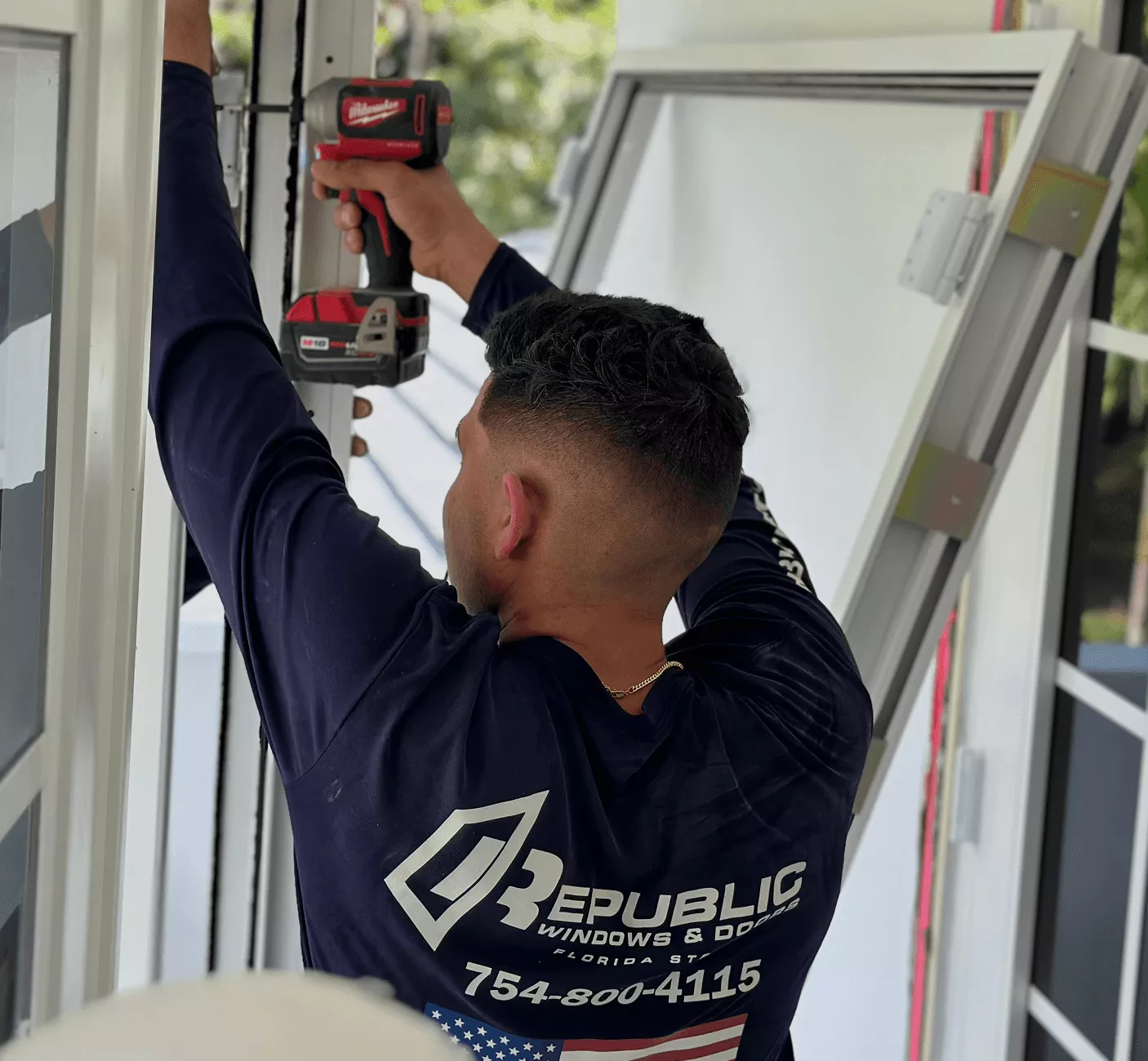
Republic handles permit applications, product ordering, scheduling, installation, and municipal final inspection in every jurisdiction we serve, under Florida contractor licenses CGC-1533058 and CCC-1337395. Explore the full impact window product range or review financing options before you book an estimate.

Reviews About Republic Windows, Doors & Roofing

Get Qualified in under 30-Minutes

Financing Solutions

Make your home improvement possible with our flexible financing

Features

Casement Impact Windows

Features

Frame color

Casement Impact Windows South FL
Impact Windows Impact Doors
color
Casement Impact Windows South FL

Glass Tint

Impact Windows Impact Doors

Proudly Serving The Following Counties in South FL

Frequently Asked Questions

How much do casement impact windows cost in South Florida?

Casement impact windows in South Florida typically cost $600–$1,800 per window, depending on size, frame material, glass type, and installation scope.

Yes. Casement impact windows are built with laminated impact-resistant glass designed to withstand hurricane-force winds and flying debris.

Yes. Casement impact windows installed by professionals meet or exceed Florida Building Code, including high-velocity hurricane zone (HVHZ) standards.

Casement windows provide a tighter seal, better energy efficiency, and improved ventilation because they open outward and lock securely on all sides.

Aluminum and vinyl are the most common. Aluminum offers strength and durability, while vinyl provides better insulation and corrosion resistance.

Casement impact windows should meet Florida Building Code (FBC) standards and include Miami-Dade Notice of Acceptance (NOA) certification.