
Trusted Impact Windows in Fort Lauderdale FL
Upgrade your home with impact windows Fort Lauderdale, FL homeowners trust. Boost storm protection, energy efficiency, and curb appeal today.




Impact windows are laminated, hurricane certified window systems that are required to exceed High Velocity Hurricane Zone (HVHZ) regulations throughout the whole county of Broward, including every property within the city boundaries of Fort Lauderdale. Republic Windows, Doors & Roofing installs, replaces and repairs them for homeowners, landlords and commercial property owners throughout the city—from canal-front residences in Las Olas to mid-century blocks in Coral Ridge and Imperial Point, condo buildings and storefronts.
Our staff are licensed and insured. We do all filing and inspections with the City of Fort Lauderdale from application to final sign-off. You gain code-compliant storm protection, decreased cooling bills through a South Florida summer, a considerably quieter interior and an update that may qualify for a windstorm mitigation credit on your insurance.
When hurricane season rolls in, homes around Fort Lauderdale are right in the line of fire—high winds, flying debris, and pounding rain quickly turn regular windows into a weak spot. Swapping those out for impact windows isn’t just a smart move for safety; it also bumps up your home’s energy efficiency and keeps things more comfortable inside all year long.
We know the local climate inside out and our licensed, insured crew has plenty of hands-on experience with Fort Lauderdale homes. We install everything to code, making sure your windows stand up to the coastal air, humidity, and relentless sun that wear things down faster here. These impact windows cut cooling bills, may help lower insurance, and make your place sturdier overall.
People who upgrade see real benefits—better storm protection, peace and quiet indoors, and even a boost to property value. With installation calendars filling fast before storm season hits, now’s the best time to lock in a quote and make sure your home is protected for the long haul.
Call Us Now
754-800-4115
Impact Window Repair and Glass Replacement in Fort Lauderdale
Not every problem with an impact window means replacing the whole unit. A cracked pane, a fogged-over sash, or a lock that no longer catches can usually be corrected without pulling the frame out of the wall, which keeps the cost down and avoids re-permitting an opening that already passed inspection. What matters is that the repair keeps the window’s impact rating intact. A window that has been patched with non-approved glass or generic hardware is no longer the assembly that was approved for your opening, and that can surface later during a wind mitigation inspection or an insurance claim.
We service impact windows across Fort Lauderdale and the surrounding Broward County area, including units we didn’t originally install.
Cracked or Broken Impact Glass
Impact glass is laminated: two panes of glass permanently bonded to an interlayer. When something strikes it hard enough, the outer pane can spider while the interlayer holds every fragment in place and keeps the opening sealed. That is the system doing exactly what it was designed to do — but the window is no longer at full strength, and it needs to be addressed before the next storm.
In most cases this is a glass replacement rather than a window replacement. The frame, anchoring, and buck stay where they are; the glass unit comes out and a matched replacement goes in. Because the opening was approved as a complete assembly, the replacement glass has to match the original product approval, so we start by identifying the manufacturer and the Notice of Acceptance on the existing unit before ordering anything.
Foggy Panes and Failed Seals
Condensation trapped between the panes means the seal on the insulated glass unit has failed. South Florida is hard on seals — sustained heat, high humidity, and salt-laden air off the Intracoastal all shorten their working life, and west-facing openings that take full afternoon sun tend to go first.
A failed seal is not just cosmetic. Once moisture is inside the unit, the insulating gas is gone and so is most of the window’s thermal performance, which shows up on a Florida cooling bill fast. The laminated impact layer generally remains structurally intact, so the window is still protecting the opening, but the energy performance you paid for is not coming back on its own. The fix is replacing the sealed glass unit in the existing frame.
Hardware, Locks, and Roller Service
Salt air corrodes moving parts long before it damages glass. Coastal and canal-front homes tend to need hardware attention first: cam latches and locks on single hungs, balances that no longer hold a sash open, rollers and tracks that bind on horizontal sliders, and operators or hinges on casements.
This is worth taking seriously rather than living with. An impact window achieves its rated design pressure only when it is fully closed and locked. A latch that no longer engages means the window is not performing to the rating it was approved under — and a locking mechanism that doesn’t function can also affect how the opening is credited on a wind mitigation inspection.
Post-Storm Damage Assessment
After a named storm, damage to an impact window is not always obvious from inside the house. Laminated glass can stay in one piece while the frame has shifted, the anchoring has loosened, or the perimeter sealant and stucco return have opened up a path for water. Those are the failures that show up as interior water intrusion during the next heavy rain rather than during the storm itself.
We inspect the glass, frame, anchoring, and seals, and document what we find in a form you can hand to your insurer if a claim is warranted.
Call Us Now
754-800-4115
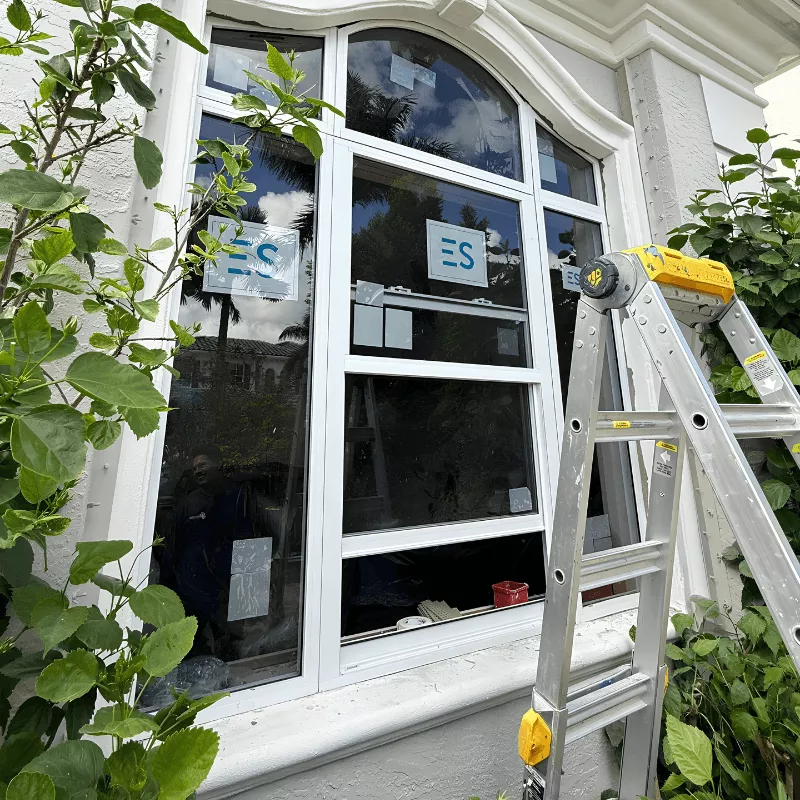
Impact Window Types We Install in Fort Lauderdale
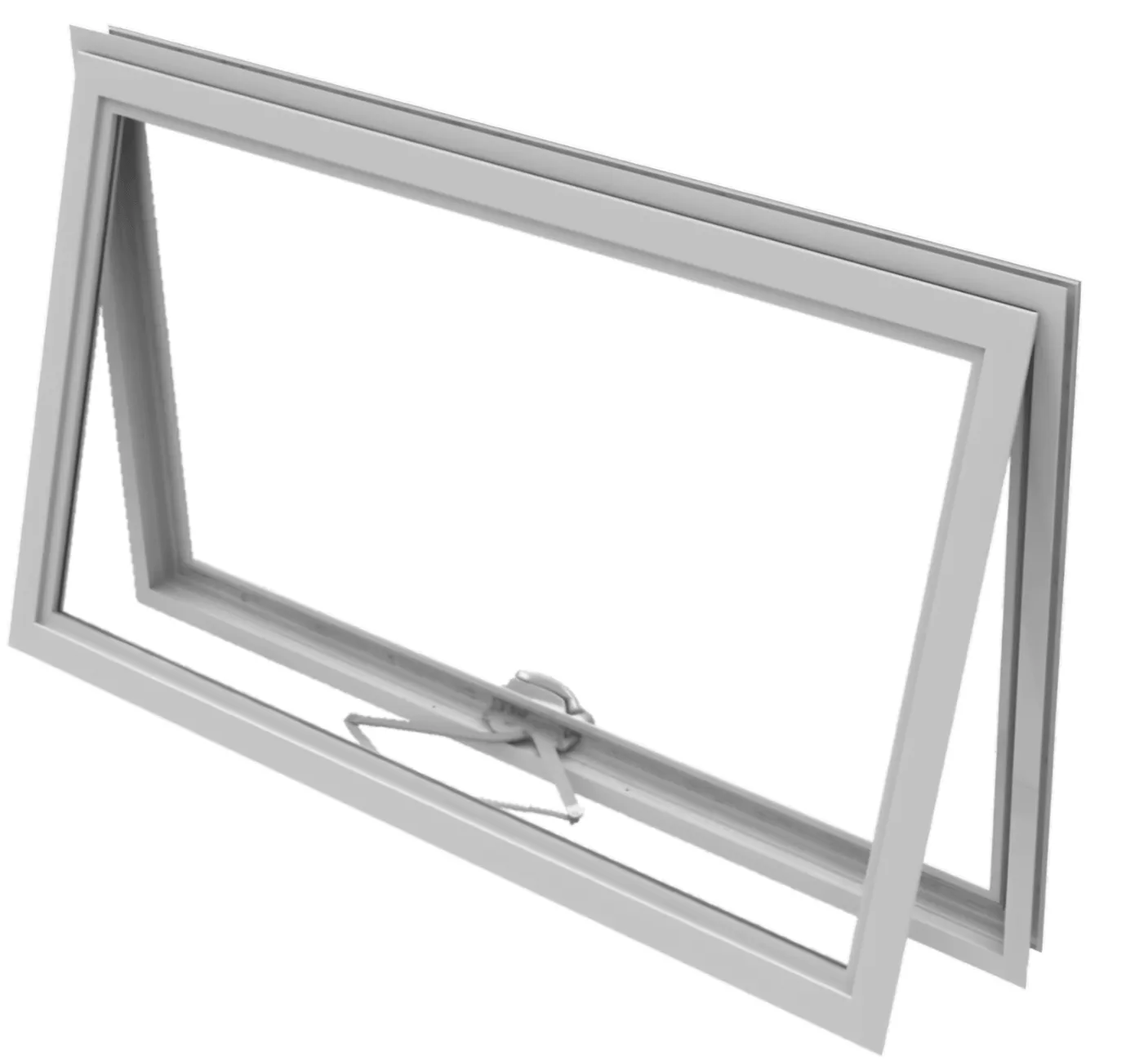
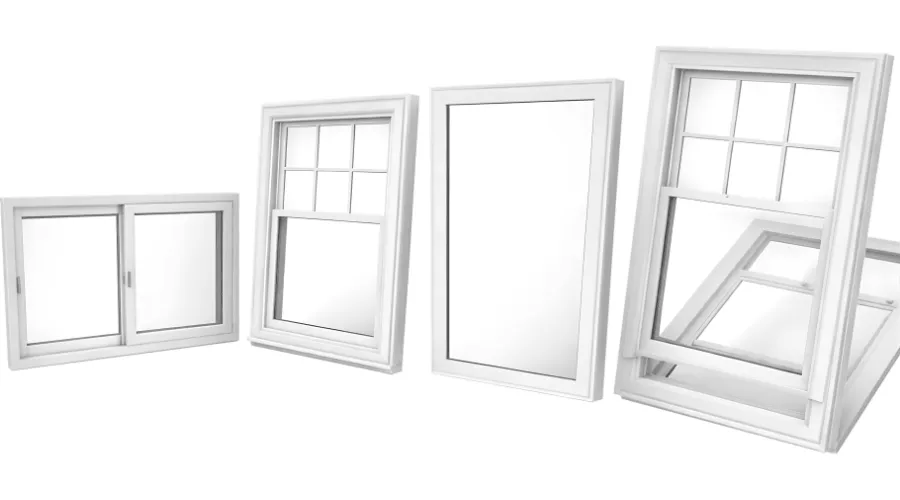
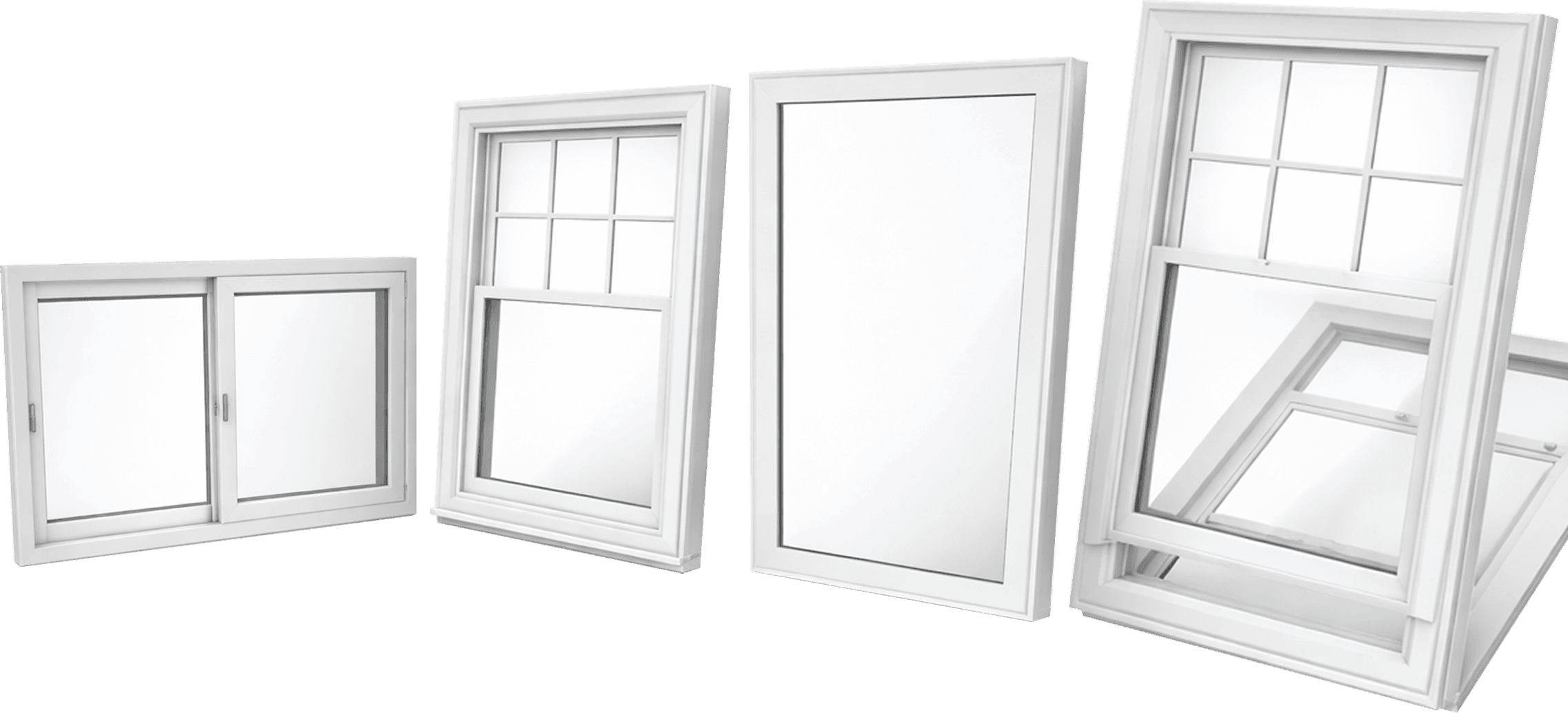
Experience the blend of style and functionality with our vinyl casement impact windows… See more
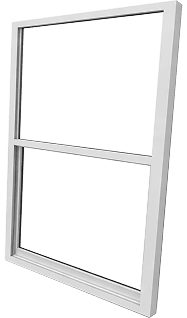
Our Single Hung impact windows are a blend of striking design and fortified protection… See more
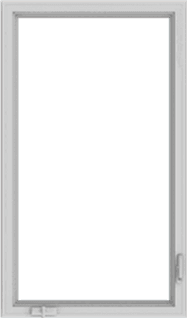
Casement impact windows are designed specifically to protect homes in areas prone to… See more
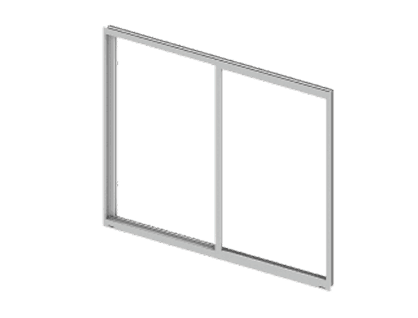
Horizontal roller impact windows are equipped with a cutting-edge track and roller system, our sliding impact windows… See more
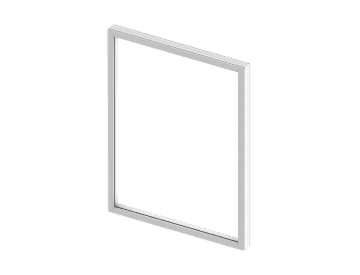
Our fixed impact windows, offer a unique touch to your home. While they do not… See more
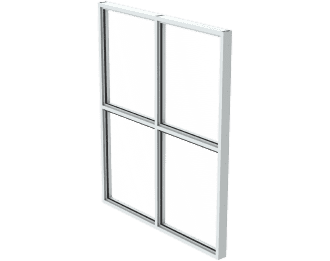
Commercial impact windows designed for business environments, featuring… See more
What Impact Glass Is Actually Made Of
An impact window is not thicker glass. It’s a laminated assembly, two lites of glass permanently bonded to a clear interlayer under heat and pressure, so the unit behaves as one piece. When something strikes it, the outer lite can break while the interlayer holds the fragments in place and keeps the opening sealed against wind and water. That distinction is the entire product. Tempered glass, by comparison, is strong until it isn’t, and then it collapses into pebbles and leaves the opening wide open, which is why tempered alone does not satisfy an impact requirement.
The interlayer is usually PVB, though stiffer ionoplast interlayers are used where larger spans or higher design pressures call for them. Either way, the finished assembly has to pass the same testing your opening is approved under: large missile impact under TAS 201, followed by cyclic wind pressure under TAS 203, plus air and water infiltration under TAS 202. A window that has passed all three carries a Notice of Acceptance identifying exactly which configurations and sizes were approved.
Most systems installed here pair that laminated unit with a Low-E coating and an insulating air space. In a cooling-dominated climate like South Florida, the number to pay attention to is SHGC, how much solar heat the glass lets through, rather than U-factor, which matters far more in heating climates. A lower SHGC is what keeps west-facing rooms from becoming unusable in August and what shows up on the FPL bill.
The interlayer also blocks most ultraviolet light, which slows fading on floors and furniture, and it dampens sound noticeably, a real benefit near the Intracoastal, along Federal Highway, or under the approach path into FXE.
Choosing Frames for Coastal Salt Air
The glass gets the attention, but in Fort Lauderdale the frame is what usually determines how the window ages. Salt-laden air off the Intracoastal and the ocean is corrosive, and it reaches well inland on an east wind, the failures we see most often on 20- and 30-year-old windows are frame and hardware failures, not glass failures.
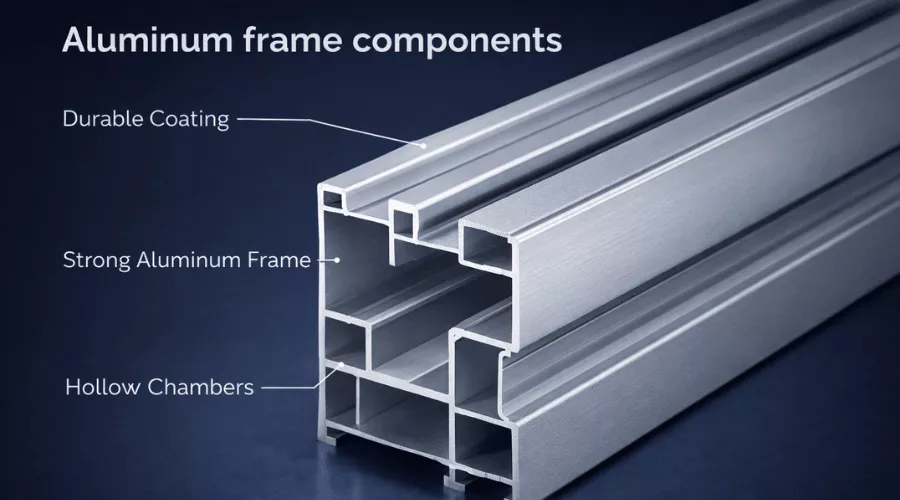
Aluminum frames are strong, which is why they dominate large openings, commercial storefronts, and anything spanning a wide waterfront view. Narrow sightlines mean more glass and less frame. The trade-offs are thermal and corrosive: bare aluminum conducts heat readily, so a thermally broken frame matters in this climate, and the finish is what stands between the metal and the salt. Anodized and quality powder-coat finishes hold up well; damaged or bargain finishes pit and chalk, and once corrosion starts around fasteners it accelerates.
Vinyl frames don’t corrode at all, and they insulate better than aluminum without needing a thermal break. Their limits are structural , very large openings and high design-pressure requirements can exceed what a vinyl system is approved for, and color, since dark vinyl absorbs a lot of heat under direct Florida sun.
There is no universally correct answer, and any contractor who gives you one is describing their inventory rather than your house. The right call depends on opening size, whether you’re east of the Intracoastal or inland, the design pressure your elevation requires, and how the window is going to look on the building.
Whatever the frame, the fasteners and anchors should be stainless in a coastal installation, and dissimilar metals should not be left in contact, that’s a corrosion problem that starts hidden and surfaces years later.
Impact Windows Features
- Miami Dade Approved
- Energy Efficiency
- HVHZ Grade
- 5/16, 7/16, 9/16 Impact glass
- Choice of Colors
- Low E or Tint Options


Materials of Construction of Impact Windows
Thinking about getting impact-resistant windows? It’s smart to know what sets them apart. Whether you’re after added security or just want your house to feel quieter, the material matters.
- Aluminum
Let’s get into aluminum. This stuff is the real MVP for high-impact windows. Seriously, it stands up to wild weather and flying debris, so your window frames don’t budge when things get rough. Plus, aluminum doesn’t rust, huge bonus if you’re anywhere near the ocean. Salt and humidity can’t touch it.
It’s surprisingly lightweight, so installation’s a breeze. Don’t mistake light for fragile, though, aluminum stays strong year after year and keeps your home protected. And you can’t ignore how clean and modern it looks. At the end of the day, aluminum frames are durable, stylish, and reliable, exactly what you want keeping your place safe.
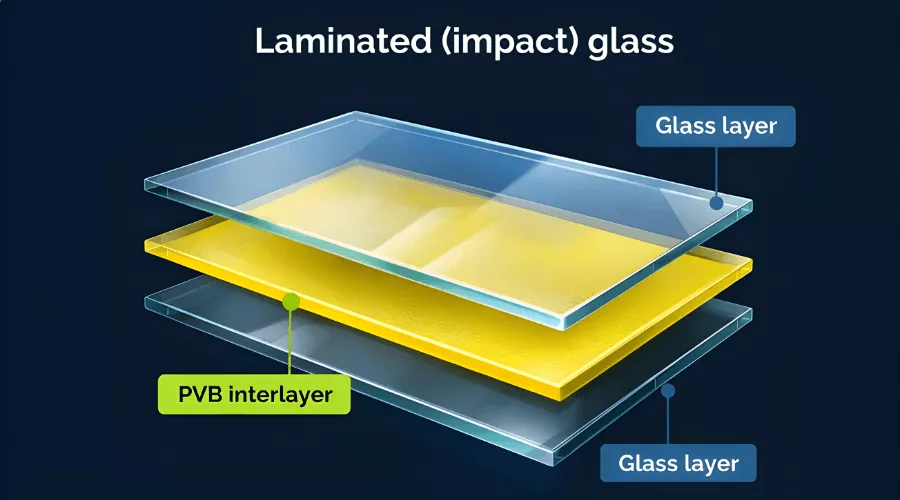
- Laminated (impact) glass
Laminated (impact) glass is the main part of shatter-resistant windows, offering a high level of protection against breakage. This glass consists of two or more layers of glass bonded with a special interlayer, usually made of polyvinyl butyral (PVB). The interlayer holds the glass together even when it breaks, preventing it from shattering into dangerous pieces.
This makes laminated glass ideal for withstanding impacts from storms, debris, or even attempted break-ins. In shatter-resistant windows, laminated glass not only provides safety but also helps reduce noise and blocks harmful UV rays, improving the overall comfort and security of your home.
Our Portfolio of Impact-Resistant Window Installations in Fort Lauderdale FL
- Innovative Solutions for Superior Quality
- Excellence Driven by Innovation
- Innovative Approaches to Superior Craftsmanship
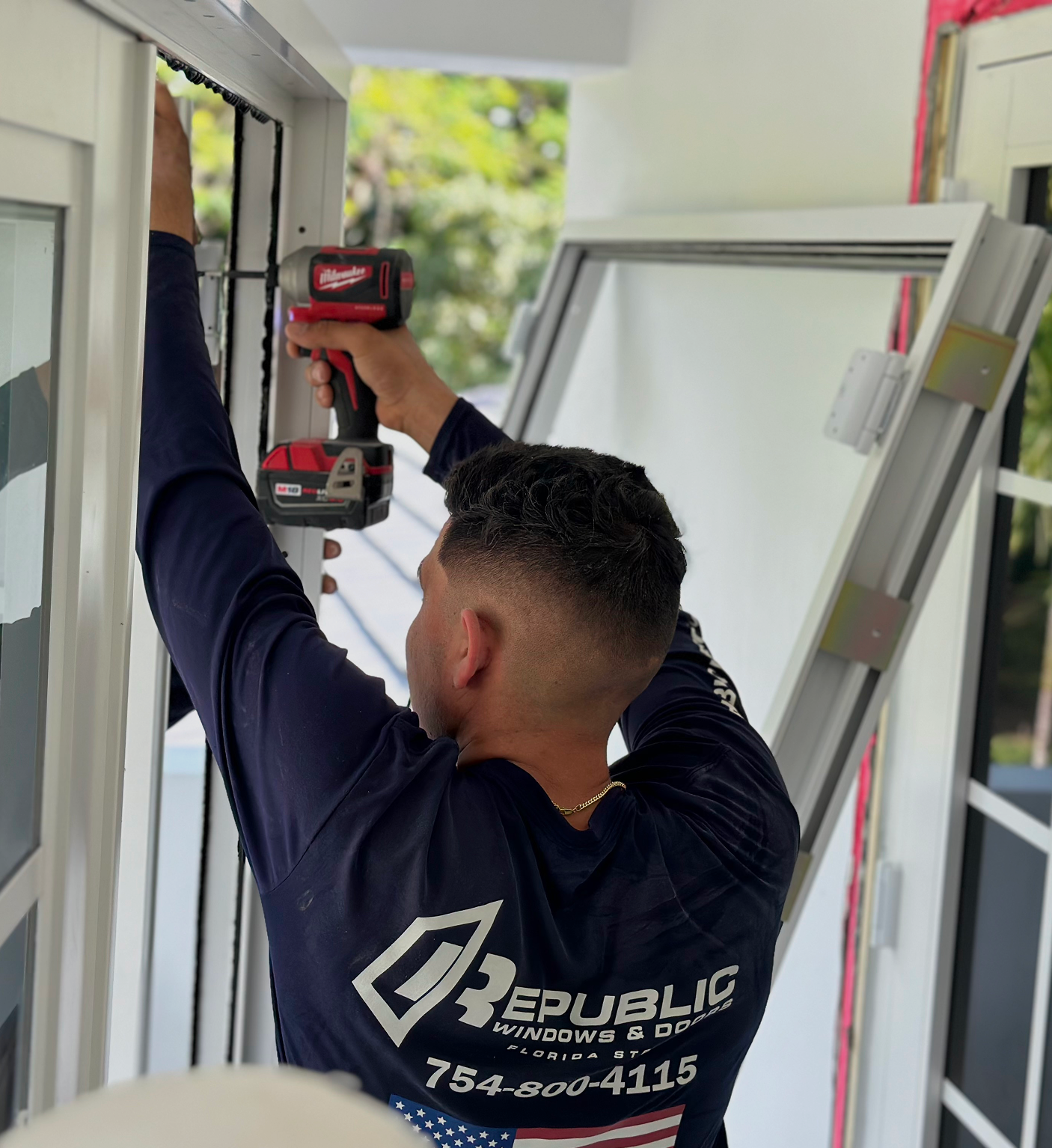
Right by Las Olas Isles, along the canal, we just finished upgrading all the windows on a waterfront house that’s seen its share of storm trouble. The old windows were huge and outdated, so they let in wind-driven rain and couldn’t hold up when storms hit. We swapped them out for impact-rated fixed and casement windows—built to handle big openings and the tough conditions by the coast. Now, the house stays secure during storms, feels better insulated, and can even get credits from the insurance company.
In Coral Ridge, right off Bayview Drive, there’s this classic mid-century house that was having a tough time with its old aluminum window frames. The salty air had really beaten them up, and those leaky seals were making cooling the place way more expensive. We got straight to work, focusing on the worst spots, and replaced those old windows with single hung impact ones. The best part? The house still looks just like it should. Now, the owner says it’s much easier to keep things cool, the energy bills have gone down, and these new windows will stick around for years.
Not far from Victoria Park, near Holiday Park, we took on a project in a freshly renovated home that aimed for a sleek, modern look. The challenge? The owners wanted strong, storm-rated protection but didn’t want to lose all that natural light inside. So, we put in horizontal roller impact windows and matched them with fixed panels for the bigger spaces. The upgrade didn’t just make the place tougher against storms—it made day-to-day living a lot more convenient, and honestly, it bumped up the property’s value, too.
Fort Lauderdale Building Codes, Permits, and Product Approval
If you’re looking to put in impact windows in Fort Lauderdale, you’ve got to follow the Florida Building Code—especially when it comes to hurricane protection and high-wind areas. Since the city sits in a wind-borne debris zone, every window needs certified approval and has to meet strict design pressure standards before you even get started.
You’ll need a permit, which means handing over detailed product approvals, engineering docs, and installation plans to the City of Fort Lauderdale’s Building Services Department. And it’s not just a one-and-done thing. Inspectors will show up at different stages to make sure the windows are anchored, sealed, and attached the right way. Once everything’s in place, you get a final inspection to confirm you’re up to code—and that’s important for your insurance and wind mitigation, too.
Our team handles everything: from filing the paperwork to clearing that last inspection. We know the local rules backwards and forwards, so you don’t have to worry. In the end, your windows will be done right, ready to handle anything the Florida coast throws at them.

MIAMI DADE APPROVED

WE OFFER FINANCE

FBC COMPLIANT

LIFETIME LABOR WARRANTY

INSURED & BONDED

FACTORY DIRECT PRICING
Fort Lauderdale Is in the High Velocity Hurricane Zone
This is the part most homeowners find out about late, usually from a contractor’s invoice. Broward and Miami-Dade are the only two counties in Florida designated as the High Velocity Hurricane Zone, and every property in Fort Lauderdale falls inside it. The HVHZ carries its own chapter of the Florida Building Code with stricter product testing, stricter installation requirements, and stricter documentation than the rest of the state.
In practical terms: every glazed opening in your home has to be protected, either with impact-rated windows and doors or with an approved shutter system. There is no option to leave an opening unprotected on new construction or a permitted replacement. And a window that is legal in Orlando or Tampa may not be legal here — statewide approval is not automatically HVHZ approval, which is why “hurricane rated” on a product page means very little on its own.
The requirement is also not uniform across your house. Design pressure varies with the size of the opening, its height above grade, and its position on the building — corners and areas near the roofline see higher pressures than the middle of a wall. That’s why an impact window is approved for specific configurations and sizes rather than as a general-purpose product, and why the correct answer for your back slider may not be the correct answer for a bedroom window on the same elevation.
What NOA and Florida Product Approval Mean
Two documents govern whether a window can legally go into your opening.
A Notice of Acceptance (NOA) is issued by Miami-Dade County Product Control and is the credential most commonly used in HVHZ work. It’s not a marketing badge — it’s a document that names the manufacturer, the exact product, the approved sizes and configurations, the design pressures it was approved for, and the anchoring method required to achieve them. Florida Product Approval is the statewide equivalent, and it can be used here only where the approval specifically covers HVHZ use.
Both rest on the same testing. The product has to survive a large missile impact test under TAS 201 — a nine-pound length of lumber fired at the glass — then immediately face thousands of cycles of positive and negative wind pressure under TAS 203 to prove the assembly holds after it’s already been damaged. TAS 202 covers air and water infiltration under pressure. Passing one without the others means nothing.
The detail that gets overlooked: the approval covers the installation, not just the window. The NOA specifies fastener type, spacing, and embedment. A correctly approved window installed with the wrong anchors into the wrong substrate is not a code-compliant opening, and that’s the failure that surfaces at inspection, or worse, at claim time.
When we submit your permit, the product approval documentation goes in with it, and the installation is inspected against that document. You should receive copies of the approvals for what was installed in your home.
A Journey Through Our Process

Contact Us
Reach out to our team to discuss your needs for impact windows, doors, or roofing services in South Florida. We’ll answer your questions, provide guidance, and schedule your consultation quickly and efficient.
Onsite Estimate
Our experts visit your property to perform a detailed inspection and accurate measurements. We provide a transparent, no-obligation estimate tailored to your windows, doors, or roofing project.
Installation
Our licensed professionals complete your installation with precision, using high-quality materials designed for durability and performance. We ensure every window, door, or roofing system meets South Florida building standards.
Completion
We finalize the project with a thorough quality check and walkthrough to ensure everything meets your expectations. Your satisfaction is our priority, and we leave your property clean, secure, and ready to enjoy.
Our Latest Projects in Fort Lauderdale FL
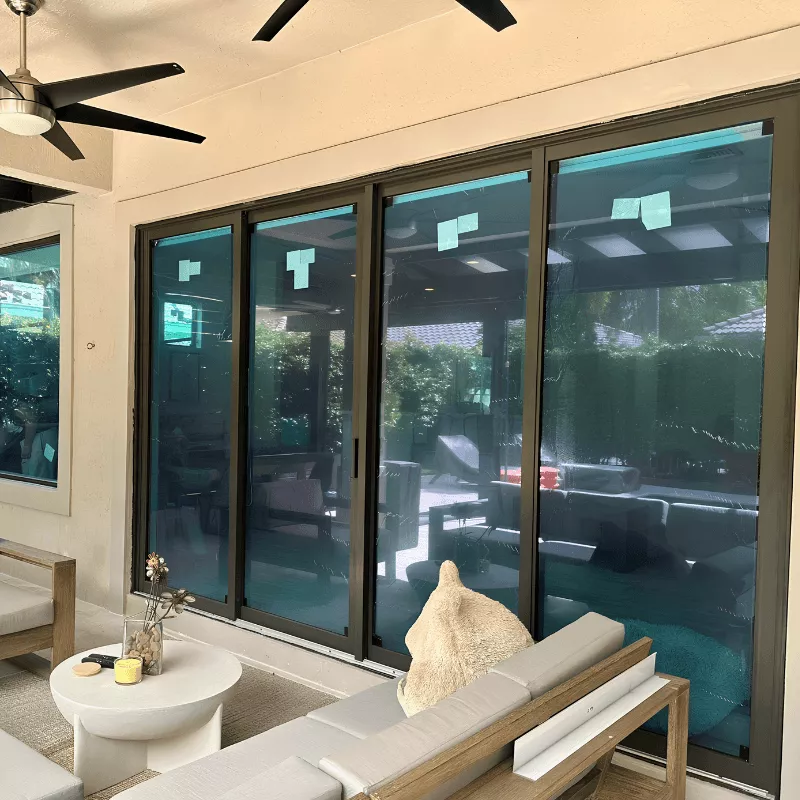
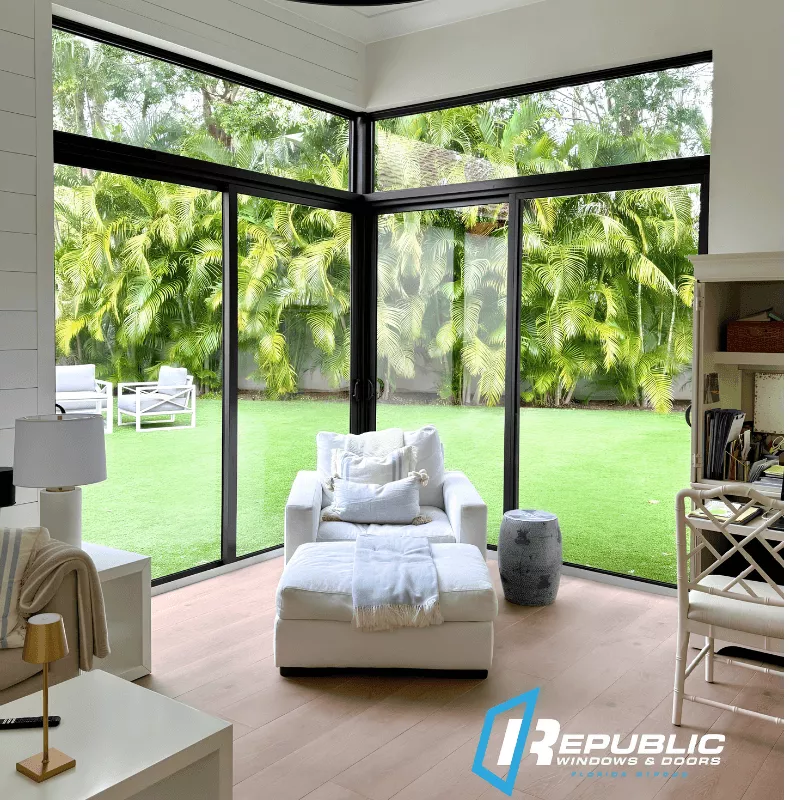
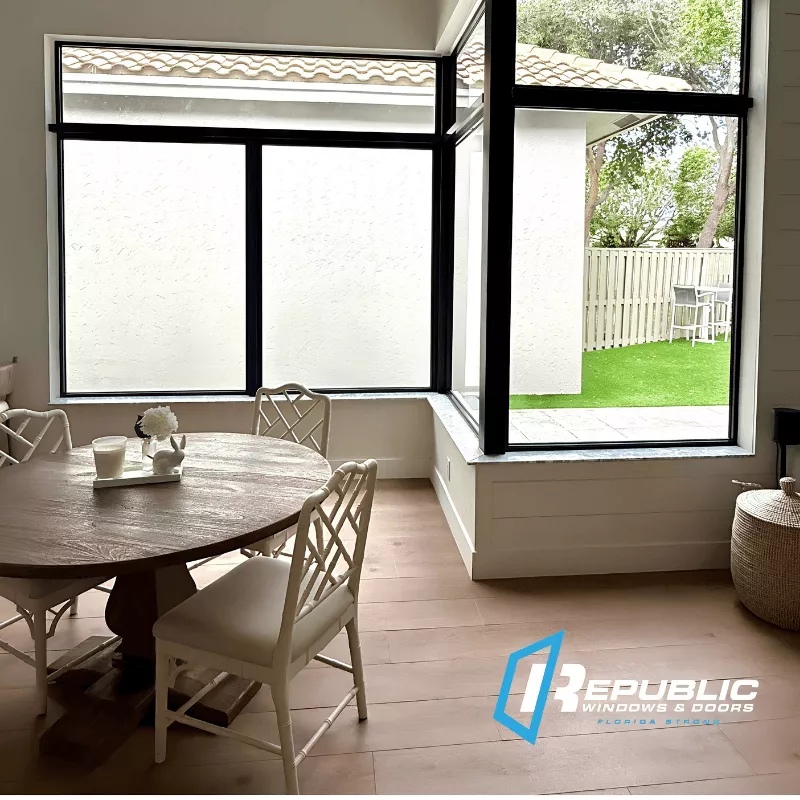
Get Qualified in under 30-Minutes
Financing Solutions
Make your home improvement possible with our flexible financing
- Available Financing, No Money Down
- No Payments for Up to 12+ Months
- Based On Home Equity
- No Minimum FICO Required
- No Impact on credit.
- Tax Deductible Financing


Reviews About Republic Windows, Doors & Roofing
Neighborhoods We Serve in Fort Lauderdale, FL
- Innovative Solutions for Superior Quality
- Excellence Driven by Innovation
- Innovative Approaches to Superior Craftsmanship
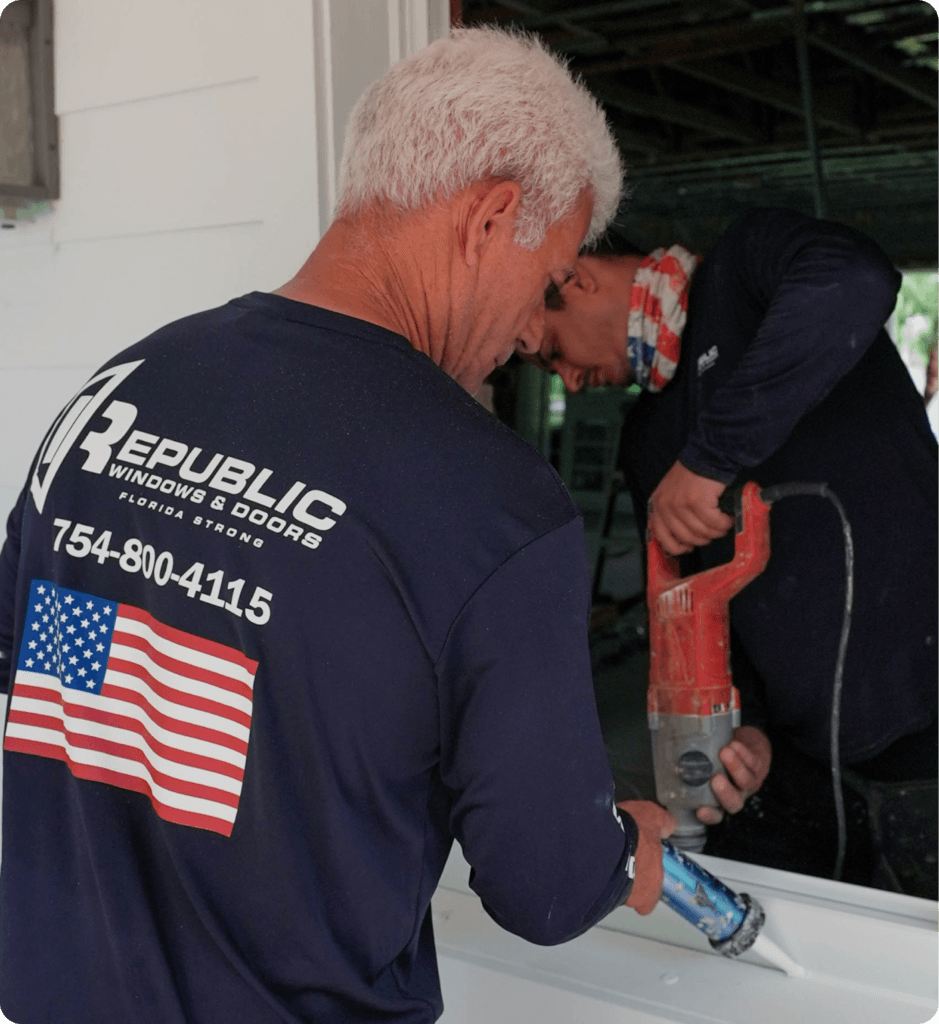
We handle impact window projects all over Fort Lauderdale, and we know the city inside and out—everything from its classic homes by the water to those tucked further inland. You’ll see our team working everywhere, one day we’re at a canal-front estate, the next we’re upgrading windows for a family in a quiet neighborhood. No matter where we are, we pay close attention to local building codes and choose materials that actually hold up in this climate.
We get how Fort Lauderdale’s environment really tests windows. Salt air from the Intracoastal? That eats through anything that isn’t designed for it. Hot, sunny days inland? Those can warp lesser windows in no time. That’s why we match our window systems to the demands of each area. We’re quick to respond, whether you live right in the city or in one of the nearby neighborhoods.
If you live in Las Olas Isles, you know those big glass walls overlooking the water need serious storm-rated windows—nothing flimsy. In Coral Ridge, we help homeowners replace old windows with options that block out the heat and stand up during hurricane season. Victoria Park has its own blend of historic homes and new builds, so we find solutions that fit both style and code. Harbor Beach? That area takes a beating from the wind and salt, so luxury homes there need our toughest systems. In Rio Vista, those beautiful old houses are even better once we upgrade their windows for sturdier protection and a better seal. Over in Wilton Manors, people want more comfort and better insulation along with storm resistance. And in Imperial Point, it’s all about lowering the power bill and keeping out the heat.
Wherever you’re based around Fort Lauderdale, we know the quirks of your neighborhood, and we’ll make sure your windows are ready.
Top Questions About Impact Windows in Fort Lauderdale, Florida
How much do impact windows cost in Fort Lauderdale, FL?
Impact windows in Fort Lauderdale typically cost $500–$1,500 per window, depending on size, style, materials, and installation scope.
Are impact windows required by building codes in Fort Lauderdale?
Yes. In many coastal and wind-borne debris areas, Florida Building Code requires impact-rated windows or approved storm protection for new construction and major renovations.
Do impact windows qualify for insurance discounts in Fort Lauderdale?
Yes. Impact windows may qualify for insurance discounts because they reduce hurricane damage risk and improve home security.
How do I know if impact windows are Miami-Dade approved?
Miami-Dade approved windows include a Notice of Acceptance (NOA) number on the product label or manufacturer documentation.
What wind ratings should impact windows have in Fort Lauderdale?
Impact windows should meet Florida Building Code requirements, typically rated for 130+ mph wind resistance depending on location and structure.
Proudly Serving The Following Counties in South FL
- Fort Lauderdale
- Pembroke Pines
- Hollywood
- Miramar
- Coral Springs
- Pompano Beach
- Davie
- Plantation
- Sunrise
- Deerfield Beach
- Lauderhill
- Weston
- North Andrews Garden
- Tamarac
- Margate
- Coconut Creek
- Oakland Park
- North Lauderdale
- Hallandale Beach
- Highland Beach
- Lauderdale Lakes
- Dania Beach
- Cooper City
- Parkland
- West Park
- Wilton Manors
- Lighthouse Point
- Melrose Park
- Manalapan
- Cloud Lakes
- Glen Ridge
- Bonita Springs
- Cape Coral
- Fort Myers (County Seat)
- Fort Myers Beach
- Sanibel
- Estero
Other Areas
- Alva
- Boca Grande
- Bokeelia
- Buckingham
- Charleston Park
- Cypress Lake
- Fort Myers Shores
- Gateway
- Harlem Heights
- Lona
- Lehigh Acres
- Matlacha
- North Fort Myers
- Olga
- Page Park
- Palmona Park
- Pine Island Center
- Pine Manor
- Pineland
- Punta Rassa
- San Carlos Park
- St. James City
- Suncoast Estates
- Three Oaks
- Tice
- Villas
- Whiskey Creek
- Aventura
- Coral Gables
- Doral
- Florida City
- Hialeah
- Hialeah Gardens
- Homestead
- Miami
- Miami Beach
- Miami Gardens
- Miami Lakes
- Miami Springs
- North Bay Village
- North Miami
- North Miami Beach
- Opa-locka
- South Miami
- Sunny Isles Beach
- Sweetwater
- West Miami
Cities
- Naples (County Seat)
- Marco Island
- Everglades City
Other Areas
- Ave Maria
- Chokoloskee
- East Naples
- Golden Gate
- Goodland
- Immokalee
- Island Walk
- Lely
- Lely Resort
- Naples Manor
- Naples Park
- North Naples
- Orangetree
- Pelican Bay
- Pine Ridge
- Plantation Island
- Verona Walk
- Vineyards
- Boca Raton
- Cloud Lake
- Gulf Stream
- Manalapan
- Boynton Beach
- Delray Beach
- Royal Palm Beach
- Riviera Beach
- Atlantis
- Tequesta
- Haverhill
- Palm Beach Shores
- Lake Harbor
- Highland Beach
- Glen Ridge
- South Bay
- Briny Breezes
- Lake Worth
- Loxahatchee
- Palm Beach Gardens
- Palm Springs
- Palm Beach
- Lake Park
- South Palm Beach
- North Palm Beach
- Belle Glade
- Ocean Ridge
- Pahokee
- Wellington
- West Palm Beach
- Greenacres
- Hypoluxo
- Jupiter
- Lantana
- Mangonia Park
- Stuart
- Palm City
- Jensen Beach
- Hobe Sound
- Port Salerno
- Indiantown
- Sewall’s Point
- Jupiter Island
- Port St. Lucie
- Fort Pierce
- St. Lucie West
- Tradition
- Hutchinson Island South
- White City
- Indian River Estates
- Lakewood Park