Palm City
Jensen Beach
Port Salerno
Stuart
Hobe Sound
Indiantown
Sewall’s Point
Jupiter Island

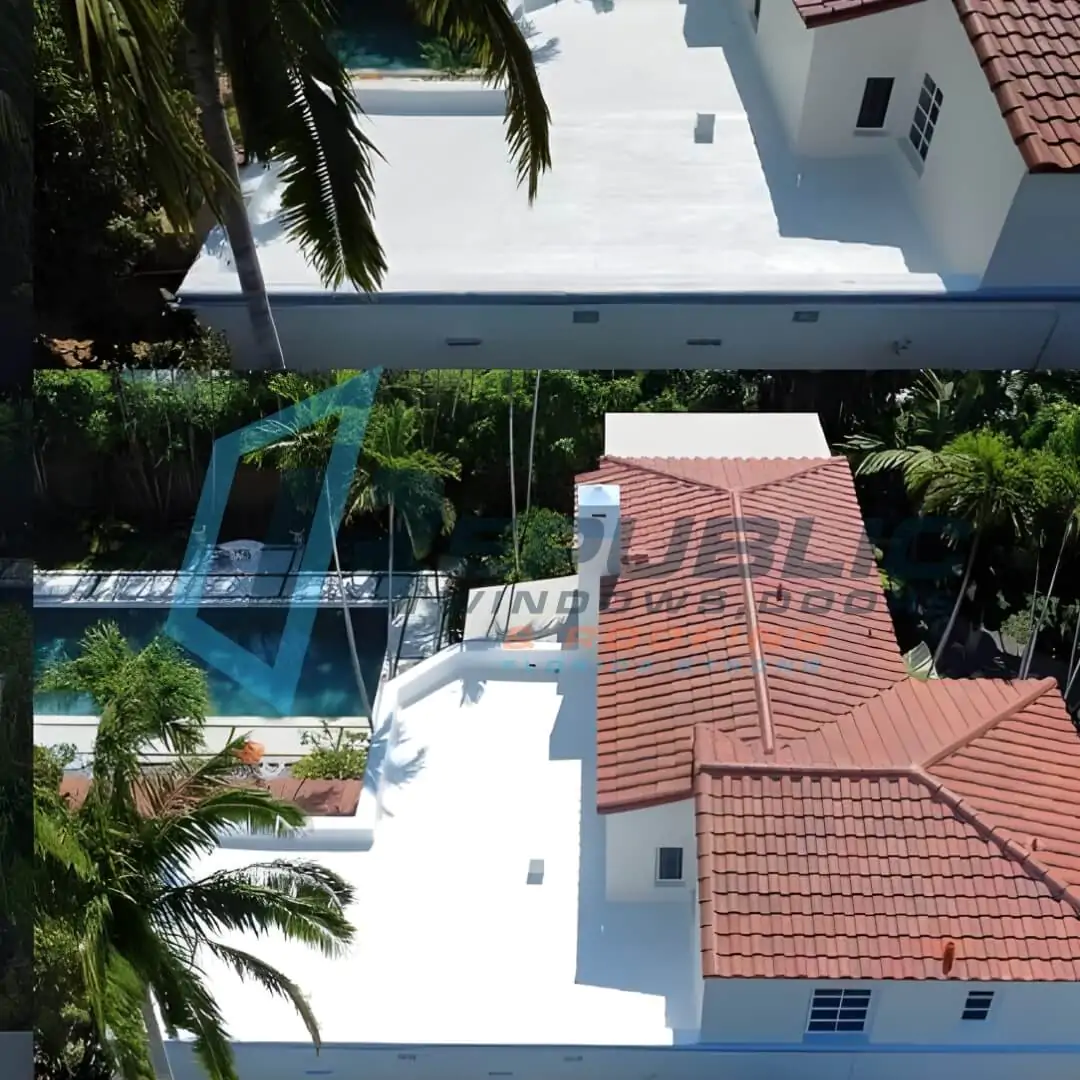
Hurricane-rated TPO, EPDM, and modified bitumen membrane systems installed to Florida Building Code wind-uplift standards for homes and commercial properties across Miami-Dade, Broward, and Palm Beach counties by a licensed roofing contractor with no subcontracted labor.






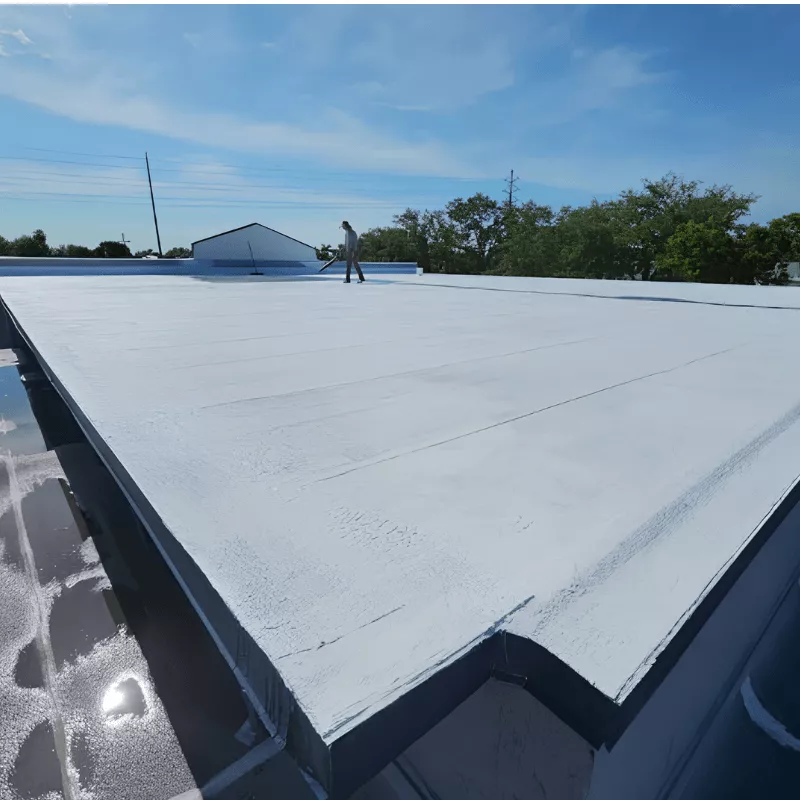
Flat roof installation in South Florida involves installing a Florida Building Code-compliant membrane system, typically TPO, EPDM, or modified bitumen, over a properly sloped deck with tapered insulation, heat-welded or fully-adhered seams, and reinforced edge flashing that meets Miami-Dade, Broward, or Palm Beach county wind-uplift requirements. A professional installation by a licensed contractor includes deck inspection, permit management, and a manufacturer warranty, and typically takes two to five days depending on roof size and system type.
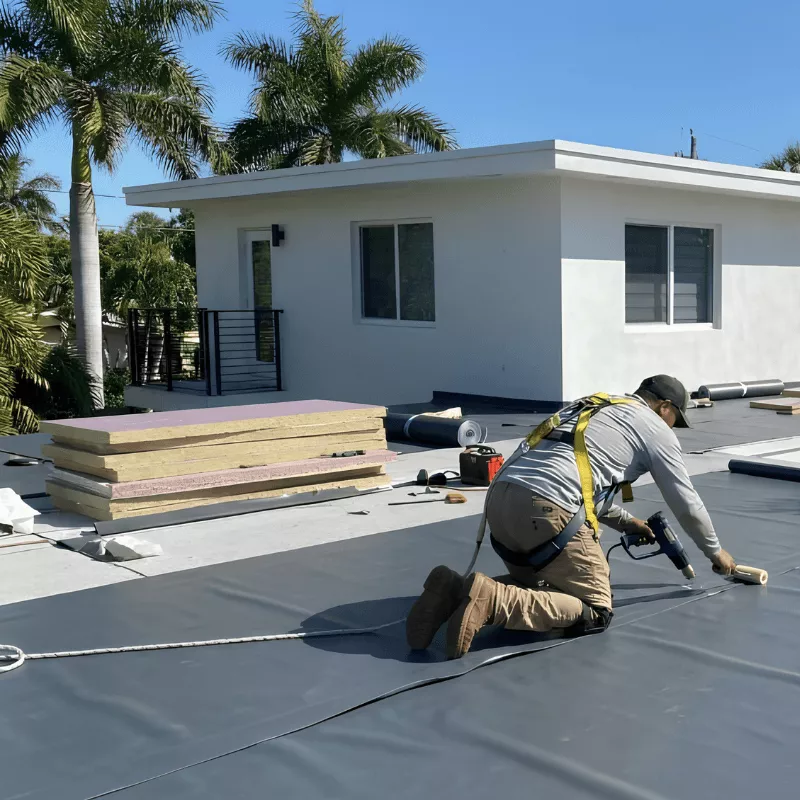
Flat roofing is different from pitched roofs, and the hazards are amplified in South Florida. The Florida High-Velocity Hurricane Zone (HVHZ) is or borders the region where sustained winds during a named storm may reach 150 mph, including Miami-Dade, Broward and Palm Beach counties. Wind uplift is particularly a problem along the edges, parapets and gutters of flat roofs.
A flat roof that passes code inspection, but is lacking the necessary slope, seam welding or edge finishing, is far more prone to develop ponding water and leaks before it breaks totally during a storm. The durability of a flat roofing system depends on the quality of the installation, not the brand of the membrane. It may be that one system lasts for twenty years, another collapses in five.
Here’s the difference between a code-minimum installation and a truly hurricane-hardened one:
Republic flat roof installation is based on the manufacturer’s installation standards and the Florida Building Code’s county wind zone criteria, not the minimum needed to pass your inspection.
Not all flat roofing membranes perform equally in South Florida’s heat, humidity, UV intensity, and hurricane-force wind exposure. Here’s how the main systems compare for this market:
| Shingle Type | Lifespan | Wind / Puncture Rating | Best For | Cost Range |
|---|---|---|---|---|
TPO | 20 – 30 Years | High wind uplift, UV reflective | Residential & commercial, energy efficiency | Moderate |
EPDM | 20 – 25 Years | Flexible, moderate wind rating | Budget-conscious, simple roof lines | Low/Moderate |
Modified Bitumen | 15 – 20 Years | High puncture resistance | Rooftop equipment, high foot traffic | Moderate |
Built-Up Roofing (BUR) |
20 – 30 Years |
Excellent multi-ply waterproofing |
Commercial, heavy rooftop use |
Moderate/High |
TPO is the most widely installed flat roofing membrane in South Florida today. Its white, reflective surface reduces rooftop temperatures and cooling costs, and heat-welded seams create a monolithic, watertight surface with strong wind-uplift performance. Rated for 20 to 30 years, TPO is a strong fit for most residential and light commercial flat roofs in Miami-Dade, Broward, and Palm Beach counties.
EPDM is a synthetic rubber membrane valued for its flexibility and lower material cost. It handles thermal movement well and is a reasonable option for simpler roof lines with fewer penetrations. Its wind-uplift and UV performance trail TPO, so Republic typically recommends EPDM for budget-conscious projects on smaller, less complex roofs.
Modified bitumen is a reinforced, multi-layer asphalt system known for its puncture resistance, which makes it a strong choice for roofs with heavy foot traffic or rooftop mechanical equipment. Installed in overlapping plies and torch-applied or self-adhered, it offers 15 to 20 years of reliable roofing service in South Florida‘s climate.
Built-up roofing is a traditional multi-ply asphalt-and-gravel or asphalt-and-cap-sheet system that has been used on South Florida commercial buildings for decades. Its layered construction provides excellent waterproofing redundancy, and with proper installation it can last 20 to 30 years — though it’s typically reserved for larger commercial applications given its weight and installation cost.
Not sure which flat roofing system is right for your building, budget, and insurance situation? Our team will review your wind zone, current deck condition, and drainage needs before providing a recommendation.
















Based on 700+ reviews
Other Areas
Cities
Other Areas
Palm City
Jensen Beach
Port Salerno
Stuart
Hobe Sound
Indiantown
Sewall’s Point
Jupiter Island
Port St. Lucie
Fort Pierce
Lakewood Park
Indian River Estates
Fort Pierce North
Hutchinson Island South
River Park
White City
St. Lucie Village
Most residential flat roof installations in South Florida are completed in two to five days, depending on roof size, system type, and deck repair needs. Commercial projects may take longer. Permit approval timelines, typically three to ten business days in Miami-Dade, Broward, and Palm Beach counties, are separate from installation time and are handled by Republic before scheduling your install date.
Yes. A roofing permit is required for flat roof installation in every South Florida county, including Miami-Dade, Broward, and Palm Beach. Installing a new roof without a permit is a code violation that can affect your property’s insurance coverage, resale value, and your ability to close a real estate transaction. Republic handles all permit applications and county inspections as part of every installation.
TPO is generally the best all-around choice for South Florida’s heat and hurricane exposure, offering strong wind-uplift performance, UV reflectivity, and a 20-to-30-year lifespan. Modified bitumen is a strong alternative where puncture resistance matters, such as roofs with heavy foot traffic or mechanical equipment. Republic recommends a system based on your building’s wind zone, drainage layout, and rooftop use.
Yes, but only membrane systems and assemblies with a valid Miami-Dade Notice of Acceptance (NOA) can be installed in the High-Velocity Hurricane Zone. Not every membrane product and fastening system carries an NOA, Republic specifies only NOA-approved flat roofing assemblies for Miami-Dade and Broward HVHZ installations, matched to the correct insulation and attachment method.
A new, code-compliant flat roof can qualify for wind-mitigation credits in Florida, particularly when installed with reinforced edge metal and a documented wind-uplift-rated assembly. After installation, a licensed wind-mitigation inspector can document the roof’s construction details, which your insurer uses to calculate applicable discounts. Republic can provide post-installation documentation suitable for your wind-mitigation inspection file.
TPO and built-up roofing systems typically last 20 to 30 years in South Florida with proper maintenance, while EPDM and modified bitumen average 15 to 25 years. Intense UV exposure, heat cycling, and ponding water are the biggest factors that shorten lifespan. Installation quality, particularly slope design, seam welding, and drainage — is the single biggest factor in reaching a system’s full rated life in this climate.
Request a Free Estimate