
Vinyl vs. Aluminum Impact Windows: Which Is Better in South Florida?
Vinyl and aluminum impact windows are not universally superior in South Florida. Aluminum provides greater structural strength, slimmer profiles, and flexibility for larger openings, while vinyl typically provides superior thermal insulation and can be a cost-effective option. The appropriate decision is contingent upon the design pressure, opening sizes, coastal exposure, energy objectives, budget, and approved product specifications of your residence.
Aluminum is utilized in Miami-Dade and Broward counties. The design pressure that a vinyl frame can hold at that scale is routinely exceeded by the openings on a typical South Florida home, which include wide horizontal rollers, large fixed picture units, and sliding glass door assemblies. Outside of the High Velocity Hurricane Zone, in Palm Beach, Collier, and Lee counties, vinyl is a viable alternative for smaller openings and reduces the project cost.
Which frame material should you choose in South Florida?
The frame material should be selected in accordance with the size of the openings in your home, the requirements for design pressure, the energy objectives, the coastal exposure, the appearance, and the budget. Aluminum is frequently chosen for large openings and demanding wind-load requirements due to its slimmer sightlines and superior strength. Vinyl can offer exceptional insulation and value when the chosen product is appropriately engineered and approved for the opening and location.
For the majority of this region, aluminum is the preferred material, while vinyl is recommended in a smaller number of instances than the general consensus.
The majority of vinyl-versus-aluminum comparisons are written for the entire country, with vinyl typically winning on the basis of price and insulation, and the discussion concludes there. The inputs are altered in South Florida. The design pressures necessitated in this location are the highest in the United States, the openings are larger than the national average due to the view being the focal point, and the air is corrosive. The answer is influenced by those three factors.
What actually decides it is the design pressure of your opening?
When selecting an impact window, the required design pressure, or DP rating, is one of the most critical factors. The required rating is influenced by the location, building height, exposure, aperture size, and structural conditions of your property. Suitability is not solely determined by the frame material. In order to satisfy the engineering and code requirements of the project, the window in question must possess an approved configuration and DP rating.
The frame material question is typically resolved based on the design pressure that your opening must withstand, rather than on personal preference.
The design pressure is the wind load that a window must resist, expressed in pounds per square foot. It is positive for wind that is pressing in and negative for wind that is pulling out. The necessary quantity is determined by the wind zone, the building’s height, the location of the aperture on the wall (corners are subject to greater loads than the center of a wall), and the size of the opening. The same frame that passes at one size fails at another due to the fact that larger openings bear a greater amount of load.
The maximum design pressure that vinyl impact windows can withstand is approximately +65/−70 psf. The cost of aluminum impact lines is significantly higher: PGT WinGuard Aluminum achieves a maximum temperature of +90/−130 psf, while ES Windows aluminum reaches a maximum temperature of +100/−140 psf in certain configurations. If your opening necessitates more than a vinyl product is approved for at that size, the material question has already been resolved, and the comparison is irrelevant.
This is also the reason why the sentence “vinyl is approved in Miami-Dade” is not a useful one on its own. Per product, per configuration, and per size, approval is granted. A vinyl window that has been authorized for 36 by 60 inches may not be approved for 72 by 60 inches.
Do vinyl impact windows work in Miami-Dade and Broward?
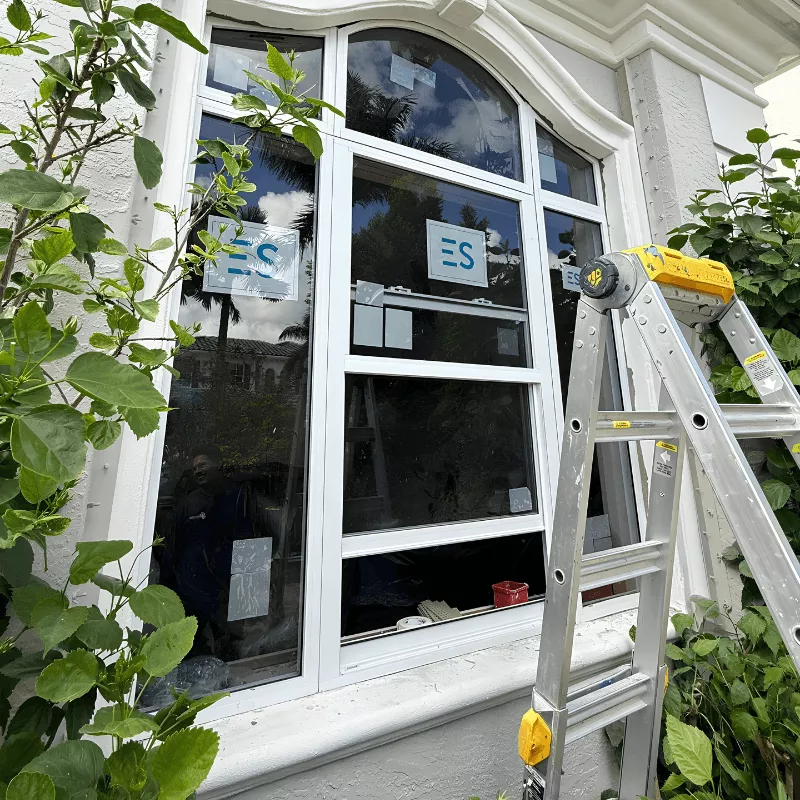
Yes, Vinyl impact windows may be authorized for installation in the High-Velocity Hurricane Zone of South Florida. The Product Control database of Miami-Dade contains vinyl impact windows that have been approved and have significant positive and negative design-pressure ratings. For instance, PGT’s vinyl impact products are currently approved by Miami-Dade. Before specifying a window, it is imperative to confirm the precise NOA, product series, dimension, impact rating, design pressure, and installation method.
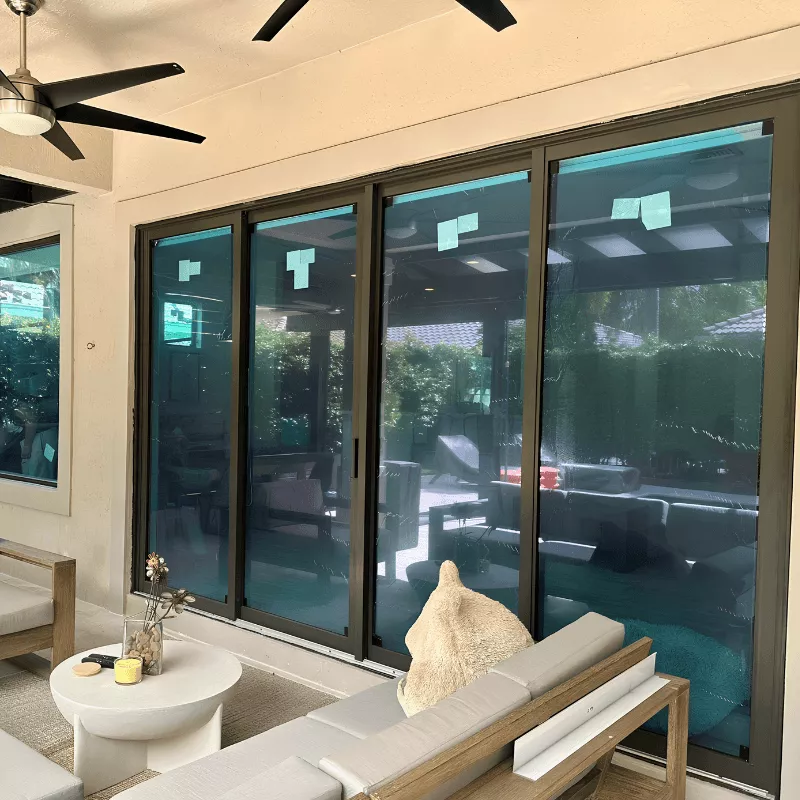
Vinyl impact windows with a Miami-Dade NOA are available and permitted for installation within the High Velocity Hurricane Zone. Vinyl is not prohibited in Miami-Dade, and any individual who asserts otherwise is incorrect.
The constraint is size, not legality. In Miami-Dade or Broward, the vinyl design pressure ceiling will be exceeded by a sufficient number of apertures during a whole-house replacement, resulting in the mixing of materials throughout the house. This implies that there are two sightline profiles on the same elevation, two finish systems that will weather differently, and two warranties to monitor. The majority of homeowners who initially desire vinyl due to its affordability ultimately opt for aluminum due to its consistency once the opening schedule is established.
How much cheaper are vinyl frames than aluminum?
Vinyl impact windows are generally less expensive than comparable aluminum systems; however, there is no universal percentage difference. The final price of the window is contingent upon the following factors: the size, quantity, product series, glass, design pressure, color, hardware, installation, and project conditions. The appropriate comparison for South Florida homeowners is an equivalent impact-rated configuration, rather than a simple comparison of vinyl and aluminum. Request quotes that align with the performance specifications.
Vinyl is generally less expensive per unit than aluminum, and the disparity is reduced after installation, permitting, and final work are included for both materials.
We maintain a single location for each installed price range, rather than reiterating them throughout the website, as prices that are located in four different locations can result in four distinct responses.
Pricing: Our impact window cost guide carries installed ranges by window type, size, manufacturer and county. [See what impact windows cost in South Florida →]
Which frame is more energy efficient?
Typically, vinyl frames offer superior thermal insulation compared to standard aluminum frames due to the fact that vinyl conducts less heat. However, aluminum can continue to function effectively when the frame includes a thermal break that minimizes the transfer of heat between the interior and exterior surfaces. Low-E coatings, spacer systems, glass selection, and installation all have a substantial impact on the overall efficacy of windows. Compare the SHGC and U-factor of the entire window, rather than the frame alone.
The frame itself is covered in vinyl. Vinyl is a weak heat conductor, whereas aluminum is an excellent one. Consequently, an untreated aluminum frame moves more heat across the wall than a vinyl frame of the same size.
In South Florida, the caveat is more significant than the headline. In a cooling climate, the glass package has a significantly greater impact on your electricity bill than the frame material. In this case, the climate is dominated by cooling. How much heat from the sun is allowed to penetrate the room is determined by the solar heat gain coefficient and the Low-E coating on the glass. A large fragment of glass is encircled by a thin border. The energy discourse frequently involves homeowners placing an excessive emphasis on the frame material and neglecting the glass specification, which is more lucrative.
What thermally broken aluminum does
An aluminum frame is equipped with a thermal break, which is a non-conductive barrier that is positioned between the interior and exterior halves. This barrier disrupts the direct course of heat that would otherwise pass through the metal. It is available on premium aluminum lines and bridges a significant portion of the performance gap between aluminum and vinyl in terms of frame performance. Thermally broken aluminum is the specification to request by name if your openings require aluminum design pressures but energy efficiency is your primary concern.
How does salt air affect each frame?
Both materials are viable in coastal South Florida provided that they are specified, finished, installed, and maintained appropriately. A corrosion-resistant finish and appropriate hardware are necessary for aluminum, as protracted exposure to salt air can accelerate corrosion. Vinyl does not corrode or rust, as opposed to metal. However, its electronics and other components still require coastal-appropriate protection. A product and finish that are specifically designed for the exposure should be applied to homes that are located near the ocean.
Vinyl does not corrode at all, while aluminum can. Consequently, coastal aluminum is specified with anodized or high-performance factory coatings and corrosion-resistant hardware.
In reality, corrosion initially manifests itself in the fin, fasteners, and hardware located in close proximity to the coast, rather than in the frame extrusion. This underscores the significance of the hardware specification and the finish specification over the selection of materials. Aluminum that is finished and affixed correctly for a coastal installation is durable; however, it is not as durable when finished for an inland market. The distinction between the two is not apparent in a quote unless you inquire.
Vinyl’s vulnerability in Florida is not salinity; it is sunlight. Vinyl windows are primarily white or light in color due to the expansion and softening of vinyl caused by sustained UV and heat. This is due to the fact that darker pigments absorb more heat. Aluminum is the optimal choice for a sun-facing elevation that requires a dark exterior frame.
How long does each frame last?
There is no singular guarantyd lifespan for either material, as its longevity is contingent upon product quality, installation, weather exposure, maintenance, hardware, glass, and environmental conditions. Many years of service can be obtained from aluminum and vinyl impact windows that are properly manufactured and installed. Because of the heat, humidity, storms, and salt air of South Florida, coastal residences necessitate special attention to hardware, finishes, seals, drainage, and maintenance.
When installed properly, both materials exceed their warranty periods, and the lifespan of a window is seldom conclusively determined by the frame material.
On either material, the hardware or the insulating glass closure is the first to fail. The geometry of aluminum remains more consistent over the course of years of thermal cycling. No, vinyl does not corrode. Installation is typically the determining factor, as neither advantage is typically paramount. No frame material can make up for the failure of a window that is correctly rated but is anchored into the incorrect substrate with the incorrect fasteners at the wall.
Which frames Republic installs, and where?
Neither brand is a guaranty for speedier delivery on all projects. Lead times are dependent upon the product series chosen, custom size, glass configuration, color, quantity, production capacity, shipping, dealer inventories and installation scheduling. ES Windows and PGT both have several product lines with various production needs. The best way to approach a renovation project is to get a current written lead-time estimate.
We install aluminum-framed impact windows throughout our South Florida product lines due to the design pressures and opening sizes that we encounter in Miami-Dade and Broward counties, which support this approach on nearly every project.
Outside of the HVHZ, vinyl is a viable option for smaller apertures and can reduce the cost of the project in Palm Beach, Collier, and Lee counties. If the budget is the sole constraint on your project, please increase it during the estimate process, and we will provide a price.
Frequently Asked Questions
Are vinyl windows good for hurricanes?
Vinyl impact windows are tested to the same impact protocols as aluminum and stop debris the same way. The difference is the design pressure ceiling: vinyl impact products top out around +65/−70 psf, so they are limited on large openings and high-exposure elevations rather than being weaker in principle.
Are vinyl impact windows allowed in Miami-Dade?
Yes. Vinyl impact windows carrying a Miami-Dade NOA can be installed inside the High Velocity Hurricane Zone. The constraint is the size and configuration the specific product is approved for, not the material.
Which is cheaper, vinyl or aluminum impact windows?
Vinyl costs less per unit. The gap narrows on installed cost once permitting, finish work and labor are counted, which apply to both. Our cost guide carries the current installed ranges.
Are aluminum windows bad for energy bills in Florida?
Untreated aluminum conducts more heat than vinyl, but in a cooling climate the glass package drives the cooling bill far more than the frame does. A Low-E glass specification with a low solar heat gain coefficient matters more than the frame material, and thermally broken aluminum closes most of the remaining gap.
Do aluminum window frames rust in salt air?
Aluminum does not rust, but it can corrode near the coast. Coastal installations should specify anodized or high-performance factory finishes with corrosion-resistant hardware. Corrosion typically appears at hardware and fasteners before the frame itself.
Can I mix vinyl and aluminum windows in one house?
It is permitted, and it happens when some openings exceed the vinyl design pressure ceiling and others do not. The trade-offs are visual and administrative: different sightlines on the same elevation, finishes that weather differently, and two warranties.
What is thermally broken aluminum?
It is an aluminum frame with a non-conductive barrier between its interior and exterior halves, which interrupts heat transfer through the metal. It improves the frame’s thermal performance substantially and is offered on premium aluminum lines.
Which lasts longer, vinyl or aluminum?
Both typically outlast their warranty periods. Failures usually begin at the glass seal or the hardware rather than the frame, and installation quality affects lifespan more than material choice does.