I. Introduction
South Florida offers unmatched coastal beauty, but the region’s climate presents a formidable challenge for homeowners. Constant humidity, salt-laden air, intense UV exposure, and hurricane-force winds create conditions that accelerate roof deterioration at a rapid pace. In beachfront and near-coastal neighborhoods, these environmental stressors can compromise traditional roofing materials far sooner than expected.
As a result, metal roofing has surged in popularity among coastal homeowners. This modern roofing solution is celebrated for its superior durability, impressive energy efficiency, and inherent resistance to hurricane-level winds. Despite the higher upfront cost, its longevity and performance lead to notable long-term savings, making metal roofs a strategic investment for those living near Florida’s shoreline.
This article provides a comprehensive guide designed to educate South Florida residents on the essentials of metal roof installation. It outlines the benefits, available metal roofing types, proper installation procedures, and maintenance steps needed to ensure lasting protection. With this information, homeowners can make confident decisions when upgrading their roofing systems.
II. Understanding the Coastal Climate of South Florida
A. Salt-Air Corrosion Impact on Roofing Materials
Salt-air exposure is one of the most aggressive forces acting on coastal roofs. Traditional metals may show early signs of pitting, oxidation, and surface degradation when exposed to ocean breezes. Modern metal roofing systems, however, use advanced coatings, such as zinc-aluminum alloys and Kynar® finishes, to resist rust. Many roof failures in beachfront homes stem from inadequate corrosion protection—an issue that high-grade metal roofing specifically addresses.
B. Intense Wind Loads and Hurricane Requirements
South Florida is part of the High Velocity Hurricane Zone (HVHZ), where building codes impose strict structural requirements. Roofing systems must endure extreme uplift pressure and wind speeds that can exceed 150 mph. Metal roofing systems outperform many alternatives due to their interlocking panels and secure fastening methods. Under intense wind loads, properly installed metal roofs remain anchored, reducing the risk of catastrophic failure.
C. Heat and UV Exposure
With year-round sunlight and high temperatures, solar radiation rapidly wears down conventional roofing materials. Metal roofing incorporates cool-roof technology with reflective coatings designed to deflect heat and reduce solar absorption. This lowers attic temperatures and relieves strain on cooling systems, ultimately trimming energy expenses throughout the hot season.
III. Why Metal Roofs Are Ideal for Coastal Properties
A. Extreme Durability
Metal roofing boasts an impressive lifespan of 40–70 years or more, far surpassing asphalt shingles that often require replacement after 15–20 years. Metal does not crack, warp, rot, or become infested with insects—making it exceptionally reliable in coastal regions.
B. Impact and Hurricane Resistance
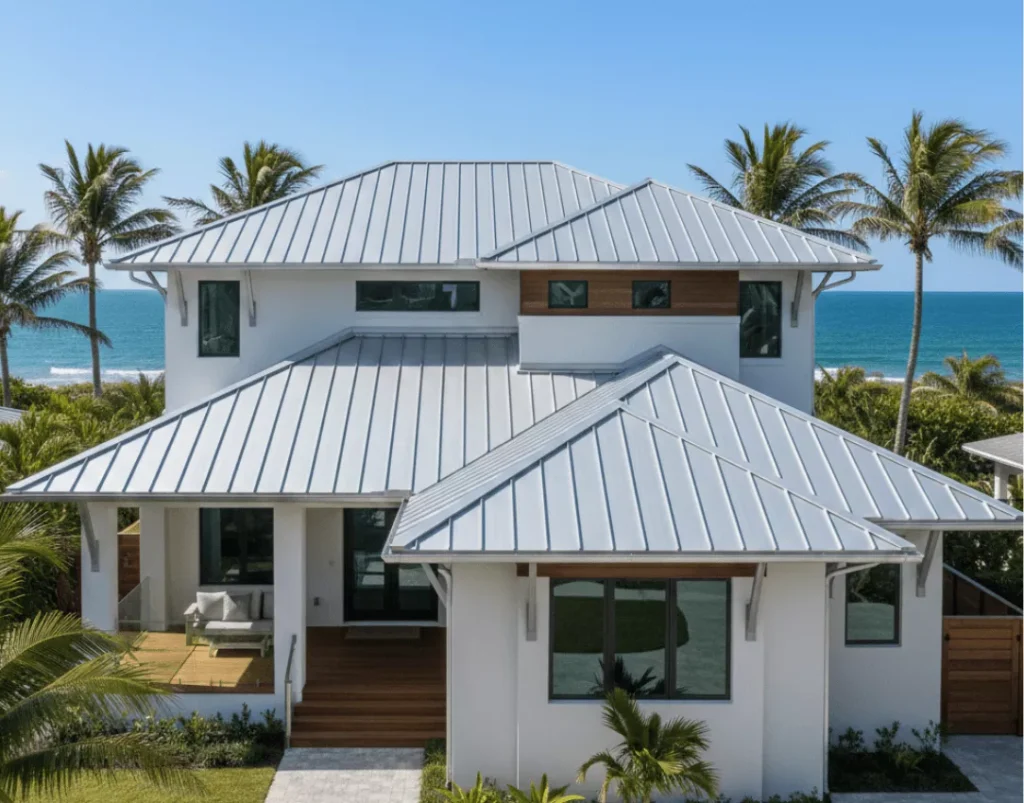
Standing seam metal roofs equipped with concealed fasteners provide powerful defense against hurricane impacts. Many systems are rated to withstand winds of 160–200 mph, depending on the configuration. Their interlocking design adds structural resilience during high-wind events.
C. Energy Efficiency
Reflective coatings and modern color pigments allow metal roofs to bounce heat away from the home. This reduces attic heat buildup and creates a more stable indoor climate, effectively lowering cooling costs in South Florida’s subtropical environment.
D. Environmental Benefits
Metal roofing is an environmentally conscious choice. The materials are often recyclable, cool-roof options reduce carbon emissions, and extended replacement cycles minimize waste. This makes metal roofing both practical and eco-friendly.
IV. Types of Metal Roofing Suitable for South FL Coastal Homes
Standing Seam Metal Roof
Standing seam systems are considered the gold standard for hurricane-prone areas. These roofing systems use interlocking vertical panels with hidden fasteners, reducing the risk of leaks and corrosion. They provide exceptional durability and sleek architectural appeal.
Metal Shingles
Metal shingles offer the appearance of traditional asphalt or tile roofing while delivering the long-lasting strength of metal. Multi-layer coatings enhance corrosion resistance, making them an attractive option for design-conscious homeowners.
Aluminum Roofing
Aluminum is often the best choice for beachfront homes. It is naturally resistant to corrosion, lightweight, and highly reflective. These characteristics make it a stellar performer in high-salt environments.
Galvalume and Steel Roofing
Galvalume combines aluminum and zinc for superior rust protection. Steel roofing is more affordable and strong but requires proper coating to combat salt exposure. Both options deliver solid performance when installed with correct materials and practices.
Copper Roofing
Copper provides a luxurious aesthetic and exceptional longevity. Its natural patina forms a protective barrier against corrosion. Although costly, copper roofs can last a century or more.
V. Key Considerations Before Installing a Metal Roof in Coastal South Florida
A. HVHZ Compliance
Homeowners must ensure their roofing system meets HVHZ requirements. This includes selecting approved materials and obtaining proper permits before installation begins.
B. Roof Pitch and Architectural Design
Metal roofing performs best with appropriate roof pitch. Homeowners should confirm compatibility with their architectural style, whether contemporary coastal, Mediterranean, or modern.
C. Underlayment Selection
Peel-and-stick membranes provide essential waterproofing and serve as an added layer of protection against wind-driven rain—critical for homes near the shoreline.
D. Fasteners, Sealants, and Coatings
Stainless steel fasteners, high-performance sealants, and Kynar 500® coatings ensure resistance to salt-air corrosion and color fading. These choices dramatically extend the roof’s lifespan.
E. Budget and Cost Expectations
Costs vary depending on the chosen material and roof complexity. Standing seam roofs generally cost more than metal shingles, while aluminum is among the highest-priced but most durable. Long-term ROI is a key advantage of metal roofing.
VI. Step-by-Step Metal Roof Installation Process
A. Initial Roof Inspection
Contractors begin with a thorough evaluation of the deck, trusses, and any previous storm damage to confirm the structure is ready for installation.
B. Removal of Old Roofing Materials
Removal must comply with Florida building codes, ensuring safe and proper disposal of old roofing materials.
C. Installation of Waterproof Underlayment
In hurricane-prone areas, a robust underlayment is indispensable. It helps safeguard against water intrusion during severe weather.
D. Panel Fabrication & Measuring
Panels are often custom-fabricated on-site to achieve precise dimensions and minimize seams. This ensures a tighter fit and enhanced durability.
E. Panel Installation
Panels are installed with hidden fasteners and correct overlaps. Additional allowances are made for thermal expansion, preserving the roof’s integrity.
F. Flashings, Ridge Caps & Ventilation
Custom flashings reinforce vulnerable areas, while ridge vents support proper airflow and temperature balance.
G. Final Inspection & Quality Assurance
A final inspection confirms compliance with HVHZ regulations and manufacturer requirements. Certification may be issued for insurance and warranty purposes.
VII. Maintenance Requirements for Metal Roofs in Coastal Homes
A. Annual Inspections
Routine inspections should check fasteners, flashings, seals, and overall roof condition to prevent small issues from becoming costly repairs.
B. Cleaning & Corrosion Prevention
Salt buildup must be removed periodically using approved cleaning techniques. Depending on the coating, occasional refresh cycles may be recommended.
C. Gutter & Debris Control
Clear gutters ensure proper drainage during storm season, preventing water from backing up beneath roofing panels.
D. Warranty Protection
Both manufacturer and installer warranties require specific maintenance steps. Adhering to these guidelines preserves long-term coverage.
VIII. Cost Breakdown of Metal Roof Installation in South Florida
A. Factors Affecting Cost
Costs are influenced by material type, roof pitch, structural complexity, underlayment selection, and HVHZ labor requirements.
B. Average Price Ranges
- Standing seam: $9–$16 per sq. ft.
- Aluminum roofing: $11–$20 per sq. ft.
- Metal shingles: $8–$12 per sq. ft.
C. Long-Term Savings
Homeowners benefit from lower cooling costs, reduced insurance premiums, and a roof that seldom requires replacement.
IX. Comparing Metal Roofing to Other Roofing Materials
A. Metal Roof vs Asphalt Shingles
Metal roofs last significantly longer, provide stronger wind resistance, and require less maintenance than asphalt shingles.
B. Metal Roof vs Tile
Metal is lighter, easier to install, and often more cost-effective. Tile roofs are heavier and susceptible to cracking during storms.
C. Metal Roof vs Flat Roofing Systems
Flat roofing struggles with drainage and is prone to leaks in coastal environments. Metal roofing offers superior longevity and performance.
X. Why Choose a Professional South Florida Roofing Contractor
A. Importance of Certified Installation
Metal roofing requires precision. Expert installers help prevent leaks, structural issues, and premature wear.
B. Knowledge of Local Building Codes
Licensed contractors understand HVHZ codes, insurance requirements, and the nuances of coastal construction.
C. Access to Quality Materials
Trusted contractors work with reputable suppliers and offer systems backed by industry-leading warranties.
D. Safety & Compliance
Professionals use proper safety equipment, follow strict procedures, and maintain up-to-date installation certifications.
XI. Conclusion
Metal roofs provide unmatched durability, superior storm protection, and exceptional long-term value for coastal residents.
Investing in a metal roof ensures readiness for South Florida’s volatile climate and offers peace of mind during hurricane season.
Schedule a professional roofing inspection before storm season begins to ensure your home is fully protected.