
I. Introduction: Roofing in South Florida
South Florida is a region defined by sun-drenched days, relentless humidity, and powerful seasonal storms. In such an environment, reliable roofing is not merely an aesthetic choice, it is a structural imperative. A roof serves as the first line of defense against extreme heat, heavy rainfall, hurricane-force winds, and corrosive coastal air. When properly designed and maintained, it protects the home’s integrity, enhances longevity, and safeguards the residents inside.
The region presents unique challenges for homeowners. Salt-laden air accelerates corrosion. Intense UV exposure degrades materials faster than in cooler climates. Torrential downpours test even the strongest waterproofing systems. These factors make roof durability and informed decision-making essential.
This guide provides homeowners with a comprehensive understanding of South Florida roofing systems, from material selection and installation to leak detection, hurricane preparation, and long-term maintenance.
II. Understanding South Florida Roofing Systems
A. Common Roofing Types Used in South Florida
- Asphalt Shingles
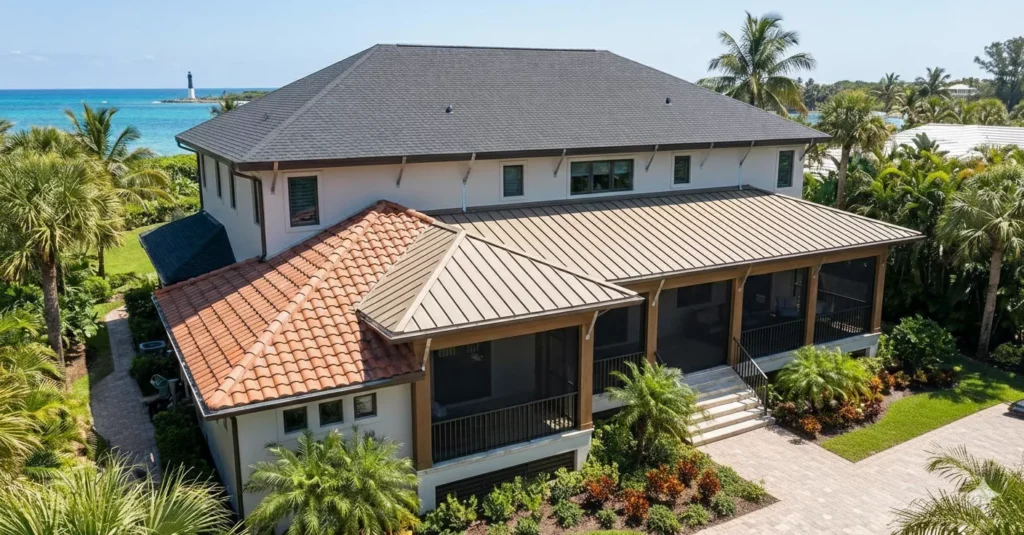
A versatile and cost-effective option, asphalt shingles are widely used across the region. They offer moderate wind resistance and come in a variety of architectural styles. - Clay & Concrete Tile Roofing
Favored for both durability and aesthetic appeal, tile roofs withstand high winds and endure decades of tropical climate exposure. Concrete tiles, in particular, offer exceptional resistance to moisture and impact. - Metal Roofing
Standing seam and aluminum metal roofing are increasing in popularity due to their superior longevity, corrosion resistance, and ability to withstand hurricane-grade winds. Metal roofs reflect sunlight effectively, reducing attic heat gain. - Flat Roofing Systems
Common on modern and commercial properties, flat systems such as TPO and modified bitumen provide strong waterproofing performance and energy efficiency when properly installed.
B. How Climate Affects Roofing Materials
- Heat and UV Deterioration
Constant exposure to Florida’s scorching sun accelerates material degradation, causing shingles to warp, tiles to fade, and membranes to lose elasticity. - Mold & Algae Growth
Persistent moisture creates ideal conditions for algae, mildew, and mold. These organisms can discolor roofs and compromise structural components over time. - Salt Corrosion on Coastal Homes
Areas near the shoreline experience accelerated metal corrosion. Specialized coatings and materials are essential to extend the lifespan of coastal roofs.
III. Roof Installation Services
A. Choosing the Right Material for Your Home
The selection of roofing materials should be based on a home’s architectural design, location, budget, and exposure to coastal elements. Durability, aesthetics, and energy efficiency all play crucial roles in decision-making.
B. Installation Process Overview
Professional installation involves a detailed inspection, removal of old materials, decking evaluation, underlayment application, and the systematic placement of the selected roofing system. Precision is vital to withstand the region’s severe weather patterns.
C. How Local Codes Affect Installation
South Florida building codes are among the strictest in the United States. They mandate hurricane-resistant fastening methods, approved materials, and enhanced wind-mitigation techniques.
D. Cost Factors to Consider
Costs vary depending on roofing type, labor complexity, property size, material availability, and compliance with local regulations.
IV. Roof Repair Services
A. Most Common Roof Issues in South Florida
- Wind uplift from tropical storms or hurricanes
- Leaks caused by intense rainfall and aging underlayment
- Broken tiles due to impact or wear
- Missing shingles after high wind events
- Flashing deterioration, a frequent source of water intrusion
B. Emergency Roof Repair
Emergency services are crucial after a storm or sudden leak. Temporary tarping, rapid inspections, and immediate stabilization measures prevent additional interior damage.
C. Storm Damage Roof Repair Process
This includes assessment, documentation for insurance, removal of compromised materials, and full restoration using hurricane-approved techniques.
V. Roof Replacement & Reroofing
A. When Roof Replacement Is Necessary
Replacement is advised when a roof reaches the end of its life cycle, has sustained severe storm damage, or exhibits widespread structural failure.
B. Reroofing vs Full Roof Replacement
Reroofing may be possible when the underlying structure remains intact. Full replacement is required when decking or structural elements are compromised.
C. Insurance Roof Replacement
Insurance may cover replacements caused by storm damage, fallen debris, or other qualifying events. Proper documentation and skilled representation improve claim success.
VI. Roof Leak Detection
A. Why Leaks Are Common in South Florida
Heavy rain, aging materials, and humidity create perfect conditions for water intrusion. Even small vulnerabilities can escalate quickly.
B. Modern Leak Detection Technologies
Infrared Scanning
Detects temperature variations to identify trapped moisture.
Moisture Mapping
Uses specialized sensors to map hidden water infiltration without invasive removal.
C. Signs Homeowners Should Watch For
- Brown ceiling stains
- Damp odors
- Peeling paint
- Mold along walls or attic spaces
- Unexpected increases in utility costs
VII. Roofing for Hurricanes & Tropical Storms
A. What Makes a Roof Hurricane-Ready
Hurricane-ready roofs incorporate reinforced fastening systems, superior underlayment, and impact-resistant materials capable of withstanding severe wind pressure.
B. Impact-Resistant Materials
These include Class 4 shingles, heavy-duty tiles, and metal roofing engineered to resist flying debris.
C. Wind Mitigation Upgrades
Roof straps, sealed roof decks, and enhanced flashing details help reduce vulnerabilities and may qualify homeowners for insurance discounts.
D. Storm Preparation Checklist
- Inspect roof for loose materials
- Clean gutters and drainage paths
- Secure outdoor items
- Schedule pre-season inspections
VIII. Roof Maintenance
A. Seasonal Roof Maintenance Checklist
- Dry Season
Remove debris, inspect seals, and evaluate aging materials. - Rainy Season
Check for leaks, clear drainage systems, and ensure flashing integrity. - Hurricane Season
Reinforce weak points, inspect for uplift risks, and repair pre-existing issues promptly.
B. Gutter Maintenance
Regular clearing prevents water buildup and foundation erosion.
C. Algae & Mold Prevention
Routine cleaning, protective coatings, and zinc or copper strips help inhibit biological growth.
IX. Energy-Efficient Roofing for Hot South Florida Summers
A. Reflective, Cool & Solar-Ready Roofing
Reflective materials reduce heat absorption, maintain cooler interior temperatures, and extend roof lifespan.
B. Insulation & Ventilation Improvements
Proper attic ventilation and upgraded insulation significantly impact energy efficiency and indoor comfort.
C. Benefits: Energy Savings, Comfort, Longevity
Energy-efficient systems decrease utility costs, reduce HVAC strain, and improve the home’s overall performance.
X. Commercial Roofing in South Florida
A. Flat Roofing Systems
Commercial properties often utilize TPO, PVC, and modified bitumen systems for durability and low maintenance.
B. Commercial Roof Coatings
Elastomeric coatings enhance reflectivity, waterproofing, and longevity for aging commercial roofs.
C. Regular Maintenance for Commercial Properties
Scheduled inspections help prevent costly disruptions and protect business operations.
XI. Local Issues Unique to South Florida Homes
- UV Rays: Accelerate deterioration
- Salt Air: Corrodes metal and fasteners
- Humidity: Promotes algae and mold growth
XII. Choosing the Right Roofing Contractor
A. What to Look For
Experience, transparency, and strong industry reputation are key indicators of quality.
B. Certifications
Look for state licensing, manufacturer certifications, and insurance compliance.
C. Red Flags
Unusually low quotes, lack of credentials, or aggressive sales tactics warrant caution.
D. Questions Homeowners Should Ask
- What materials do you recommend and why?
- Are you familiar with South Florida building codes?
- What warranties do you provide?
- What is the expected project timeline?
XIII. Conclusion
A well-constructed and properly maintained roof is indispensable for living comfortably and securely in South Florida’s volatile climate. From intense sunlight to tropical storms, every home requires a roofing system capable of enduring nature’s extremes. By understanding materials, installation standards, maintenance practices, and hurricane preparedness, homeowners can make informed decisions that protect their property for decades to come.
For expert guidance or professional roofing services, schedule a consultation with a certified South Florida roofing specialist today.