
Why Roofing Materials Matter in South Florida’s Coastal Climate
Coastal South Florida offers a uniquely demanding environment for residential roofing systems. Constant exposure to moisture-laden air, saline particulates, blistering UV radiation, and seasonal hurricane threats places extraordinary stress on building materials. A roof in this region must do more than simply provide shelter, it must function as a resilient barrier engineered to withstand corrosive coastal conditions and extreme weather volatility. Selecting the appropriate roofing material ensures structural longevity, energy efficiency, insurance compliance, and overall home protection. Understanding the region’s environmental stressors is the first step in choosing a roofing system capable of enduring South Florida’s coastal climate.
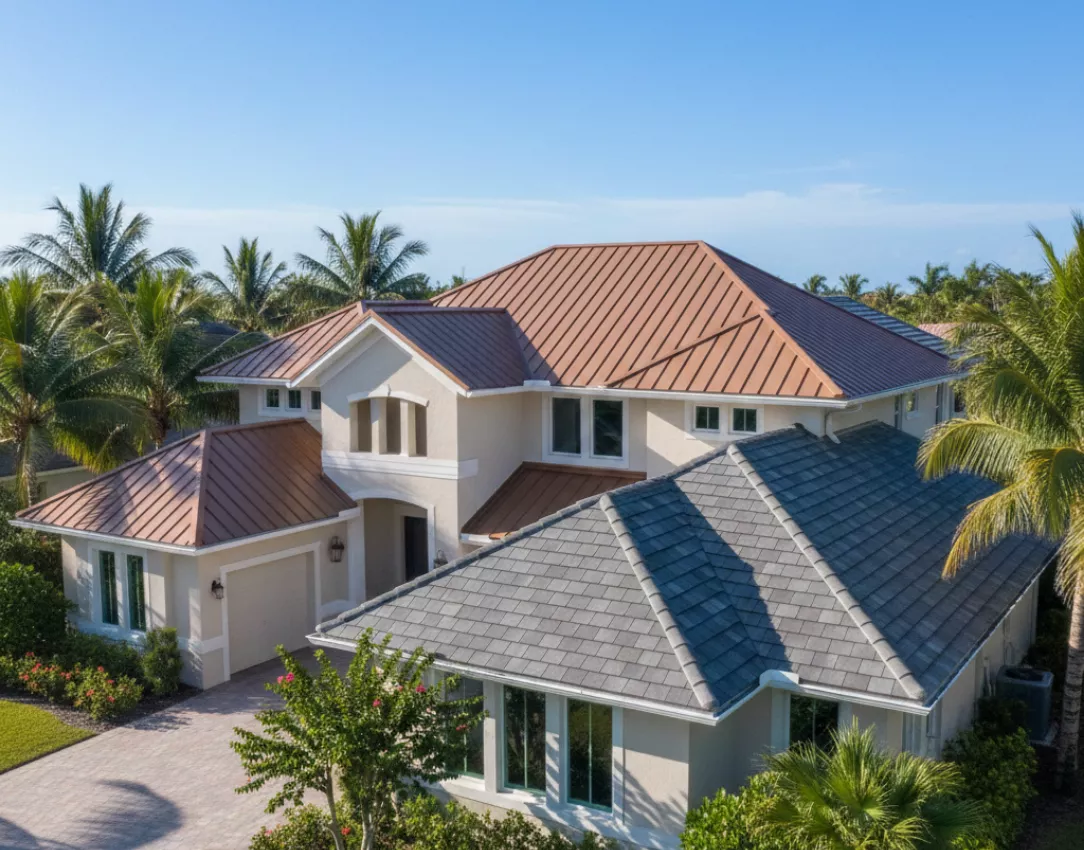
Understanding South Florida’s Coastal Weather Challenges
South Florida’s coastal weather is a blend of intense sun, tropical humidity, and unpredictable storm patterns. Temperatures routinely hover near or above 90°F for long stretches, while atmospheric moisture saturates the air throughout the year. Afternoon thunderstorms roll in almost daily during the summer months, bringing abrupt rainfall and strong gusts. The region’s location along the Atlantic hurricane corridor adds another layer of risk, with powerful cyclones capable of producing sustained winds exceeding 150 mph. These conditions demand materials that resist uplift, repel moisture, and maintain structural integrity despite extreme atmospheric fatigue.
How Salt Air Impacts Roofing Longevity
Salt air is one of the most corrosive forces affecting coastal roofs. Microscopic salt particles carried by ocean breezes infiltrate seams, fasteners, flashing, and surface materials. Over time, this accelerates oxidation in metals, degrades protective coatings, and weakens structural components. Even materials not typically prone to corrosion may experience premature wear when exposed to persistent salinity. Homeowners must choose roofing systems designed with corrosion-resistant alloys, marine-grade finishes, or inherently salt-tolerant composites to prevent deterioration and preserve the roof’s lifespan.
High Humidity and Its Effect on Roofing Materials
Humidity levels in coastal South Florida consistently reach levels that encourage mold, mildew, and algae proliferation. Roofing materials that absorb moisture or retain dampness deteriorate at a significantly faster pace. Asphalt shingles, wood elements, and porous concrete surfaces are particularly susceptible without proper additives or treatments. High humidity can also compromise attic ventilation, trapping moisture beneath the roof deck and leading to rot or insulation damage. Materials designed to shed water efficiently and resist biological growth are essential to maintaining durability in such humid conditions.
Hurricane-Force Winds: Essential Considerations for Roof Strength
Hurricane-force winds place extreme uplift pressure on roofing systems. When wind flows across a roof’s surface, negative pressure zones form, pulling upward on tiles, shingles, or metal panels. Even small failures can escalate rapidly as wind penetrates beneath the material. Roofing systems for coastal homes must meet stringent wind-resistance ratings, often exceeding 150 mph. Materials with interlocking mechanisms, concealed fasteners, or heavy structural mass tend to perform best during tropical storms. Proper installation, including enhanced fastening patterns and certified underlayment’s, is equally crucial to preventing storm-related failures.
UV Exposure and Heat: Choosing Materials That Withstand Extreme Sun
Solar radiation in South Florida is relentless. UV rays break down roofing materials over time, causing fading, brittleness, warping, and loss of tensile strength. Prolonged heat exposure accelerates thermal expansion and contraction cycles, stressing joints and fasteners. Durable roofing materials must incorporate UV-resistant coatings, reflective surfaces, or heat-tolerant compounds to endure the region’s intense sunlight. Reflective roofing options also reduce cooling loads, leading to more efficient indoor temperature control.
Key Factors to Consider When Selecting Roofing Materials for Coastal Homes
Evaluating roofing choices for coastal homes requires balancing multiple performance criteria. Materials must withstand high winds, resist moisture intrusion, endure salt exposure, and maintain structural integrity under extreme heat. Their weight, design compatibility, and energy efficiency also influence overall performance. Homeowners should evaluate how well each material aligns with long-term maintenance expectations, insurance requirements, and architectural aesthetics.
Wind Resistance Ratings and Storm Durability Requirements
Roof systems must meet local building codes specifying wind uplift ratings. Opting for materials certified for high-velocity hurricane zones ensures better storm resilience.
Moisture Protection and Mold Resistance
Moisture-resistant materials reduce the risk of mold, algae, and structural decay, critical in a region with constant humidity.
Energy Efficiency and Heat Reflection Benefits
Reflective roofs lower indoor temperatures and reduce cooling expenses by minimizing heat absorption.
Lifespan and Required Maintenance Levels
Some materials, such as metal or tile, offer exceptional longevity with relatively low maintenance, while others require periodic replacement.
Aesthetic Appeal for Coastal Architecture Styles
Coastal architecture ranges from Mediterranean influences to sleek modern lines. Roofing materials should complement the home’s aesthetic while delivering performance.
Metal Roofing: The Leading Choice for Coastal Durability
Metal roofing has become a preferred choice for coastal South Florida due to its exceptional resistance to salt corrosion, high winds, and extreme heat. Modern metal roofing systems utilize advanced coatings, including Kynar and Galvalume finishes, that significantly reduce oxidation and surface degradation. Their inherent strength allows them to withstand hurricane-force winds better than many traditional materials.
Why Metal Roofs Perform Exceptionally Well in Salty Air
High-quality aluminum and steel alloys resist corrosion far more effectively than untreated metals. Protective coatings create a barrier against salt intrusion, maintaining structural integrity for decades.
Wind and Impact Resistance Features of Metal Roofing
Metal panels, when properly fastened, deliver industry-leading wind uplift resistance. Their rigid construction also provides notable impact resistance against debris.
Standing Seam vs. Metal Shingles: Which Is Better?
Standing seam systems offer superior protection due to concealed fasteners and continuous metal runs. Metal shingles provide a more traditional appearance with comparable durability.
Energy-Saving Benefits of Metal Roofing in Tropical Climates
Metal’s reflective properties help minimize heat absorption, reducing strain on air-conditioning systems throughout the year.
Clay Tile Roofing: Classic Style with Proven Coastal Strength
Clay tiles have long been a staple in coastal and Mediterranean architectural designs. Their inherent density and composition make them naturally resistant to heat, salt, and moisture. Clay’s ability to withstand harsh climates has been proven over centuries of use in coastal environments around the world.
How Clay Tiles Resist Salt, Heat, and Moisture
Clay tiles do not degrade when exposed to salt air, and their non-porous surface prevents moisture penetration. Their natural composition withstands extreme heat without warping.
Impact Resistance and Storm-Ready Benefits of Clay Tile Roofs
Clay tiles are heavy, providing stability during strong winds. When installed with modern fastening systems, they deliver impressive hurricane resilience.
Spanish, Barrel, and Flat Tiles: Which Design Fits Coastal Homes?
Homeowners can select from various profiles depending on architectural style. Barrel tiles complement Mediterranean designs, while flat tiles suit more contemporary structures.
Concrete Tile Roofing: A Heavy-Duty Option for Coastal Stability
Concrete tiles offer many of the same advantages as clay but come at a more affordable price point. Their substantial weight contributes to superior wind resistance, making them suitable for high-velocity hurricane zones.
Why Concrete Tiles Excel in High-Wind Zones
Concrete tiles can remain intact in extreme winds due to their mass and secure fastening systems.
Maintenance Tips to Prevent Algae and Moisture Buildup
Periodic washing and treatment with algae-resistant coatings help maintain appearance and performance.
Cost vs. Longevity: Is Concrete Tile Worth the Investment?
Concrete tile roofs often last several decades, offering excellent long-term value despite higher upfront installation costs.
Asphalt Shingle Roofing: Budget-Friendly but Requires Smart Choices
Asphalt shingles remain popular due to affordability, but not all shingles are suitable for coastal conditions. Selecting high-performance architectural shingles is essential to ensure durability.
Architectural vs. 3-Tab Shingles for Coastal Areas
Architectural shingles offer better wind resistance and thickness compared to traditional 3-tab shingles.
Shingle Additives That Improve Wind and Algae Resistance
Manufacturers incorporate polymers and copper granules to improve storm performance and reduce algae growth.
Why Asphalt Shingles May Need More Frequent Replacement
Humidity, heat, and salt exposure cause asphalt shingles to degrade faster in coastal environments.
Slate Roofing Alternatives: Synthetic Slate for Coastal Environments
Synthetic slate provides the aesthetic appeal of natural stone without the excessive weight or vulnerability to salt.
Weather Resistance Advantages of Composite Slate
Composite tiles resist cracking, moisture infiltration, and UV damage, making them suitable for coastal climates.
Weight Benefits Compared to Natural Stone Slate
Synthetic products weigh significantly less, reducing structural load and installation time.
Aesthetic Options That Complement South Florida Homes
Varied textures, colors, and profiles allow homeowners to match modern or traditional designs.
Flat Roofing Options for Coastal Properties
Many coastal homes incorporate flat roofing for modern aesthetics or multi-level structures.
TPO and PVC Roofing for Superior Moisture Protection
Both materials provide excellent waterproofing and resist mold growth.
Why Flat Roofs Require Enhanced Waterproofing in Humid Regions
Flat surfaces retain moisture, making reinforced waterproof membranes essential.
Energy Efficiency Benefits of White Reflective Flat Roof Systems
White membranes reflect sunlight, reducing cooling demands.
Eco-Friendly Roofing Options for Coastal Homes
Sustainable roofing technologies offer environmental benefits without compromising durability.
Cool Roof Coatings That Reduce Cooling Costs
Reflective coatings reduce surface temperatures and extend roof lifespan.
Recycled and Sustainable Roofing Materials That Handle Salt and Sun
Materials such as recycled metal or composite shingles provide eco-conscious alternatives.
Green Roofing Considerations for Coastal Climates
Vegetative roofs can work in coastal areas with proper waterproofing and drainage.
Roofing Features That Improve Coastal Home Protection
Additional features can significantly enhance a roof’s defensive capabilities.
Impact-Resistant Underlayment for Hurricane Zones
High-strength membranes prevent water intrusion if outer materials are compromised.
Corrosion-Resistant Fasteners and Hardware
Stainless steel or coated fasteners prevent rust and maintain structural stability.
Enhanced Ventilation Systems for Humid Conditions
Proper ventilation reduces moisture buildup and prolongs roof life.
Common Roofing Mistakes Coastal Homeowners Should Avoid
Poor material choices or installation shortcuts lead to accelerated roof failure.
Choosing Low-Grade Materials Not Suited for Salt Air
Inferior materials deteriorate quickly in coastal climates.
Ignoring Wind Ratings and Manufacturer Specifications
Non-compliant installations can void warranties and reduce storm protection.
Skipping Regular Maintenance and Inspections
Routine inspections help detect issues early and prevent costly damage.
Cost Comparison: Which Roofing Material Provides the Best Value?
Evaluating long-term performance provides a clearer picture of total value.
Installation Costs vs. Long-Term Durability
Higher upfront costs may correlate with greater longevity and fewer repairs.
Energy Savings and Insurance Discounts
Reflective materials and hurricane-rated systems may lower utility and insurance expenses.
Expected Lifespan of Each Roofing Option
Metal and tile roofs typically outlast asphalt shingles by decades.
Maintenance Tips to Extend Roof Life in Coastal Areas
Proper care preserves performance and durability.
How to Clean and Protect Roofing Materials from Salt Exposure
Periodic rinsing helps prevent salt accumulation and corrosion.
Importance of Scheduled Roof Inspections After Storms
Post-storm assessments allow homeowners to address damage before it spreads.
Recommended Sealants and Protective Coatings
UV-resistant and waterproof coatings enhance longevity.
Signs Your Coastal Roof Needs Repair or Replacement
Early detection helps prevent structural damage.
Wind Damage Indicators to Look For
Lifted shingles, displaced tiles, or exposed fasteners indicate wind stress.
Moisture Intrusion Warning Signs
Interior stains or warping signal compromised waterproofing.
Material-Specific Problems: Metal, Tile, Shingle, and More
Each material exhibits unique failure markers requiring expert evaluation.
Conclusion: Choosing the Right Roofing Material for a Long-Lasting Coastal Home
Selecting the ideal roofing material for a coastal South Florida home requires careful consideration of climate-specific challenges such as salt air, humidity, UV exposure, and hurricane-force winds. Materials like metal, clay tile, concrete tile, and synthetic slate offer reliable performance when chosen and installed correctly. Evaluating longevity, maintenance requirements, energy efficiency, and architectural compatibility ensures a roofing system that provides both protection and aesthetic appeal. With informed decision-making, homeowners can invest in a roof that withstands the region’s demanding conditions while enhancing the long-term value of their property.